
Last updated September 20, 2026
Full 25-point door and opener safety check with every visit - springs, cables, rollers, tracks, and your LiftMaster or Chamberlain opener included
You get a price before we start. It does not change when the truck arrives.
Modern flush
LiftMaster openers
 Before
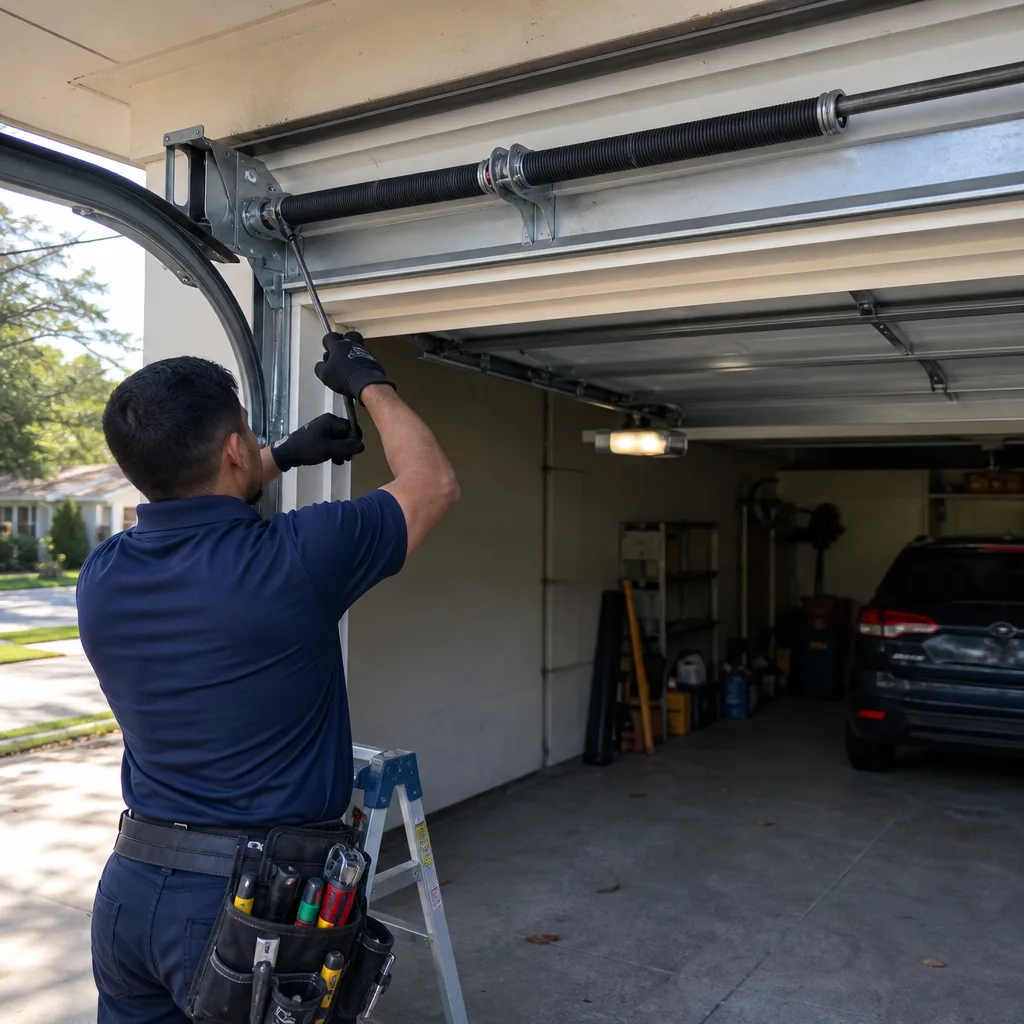 After
After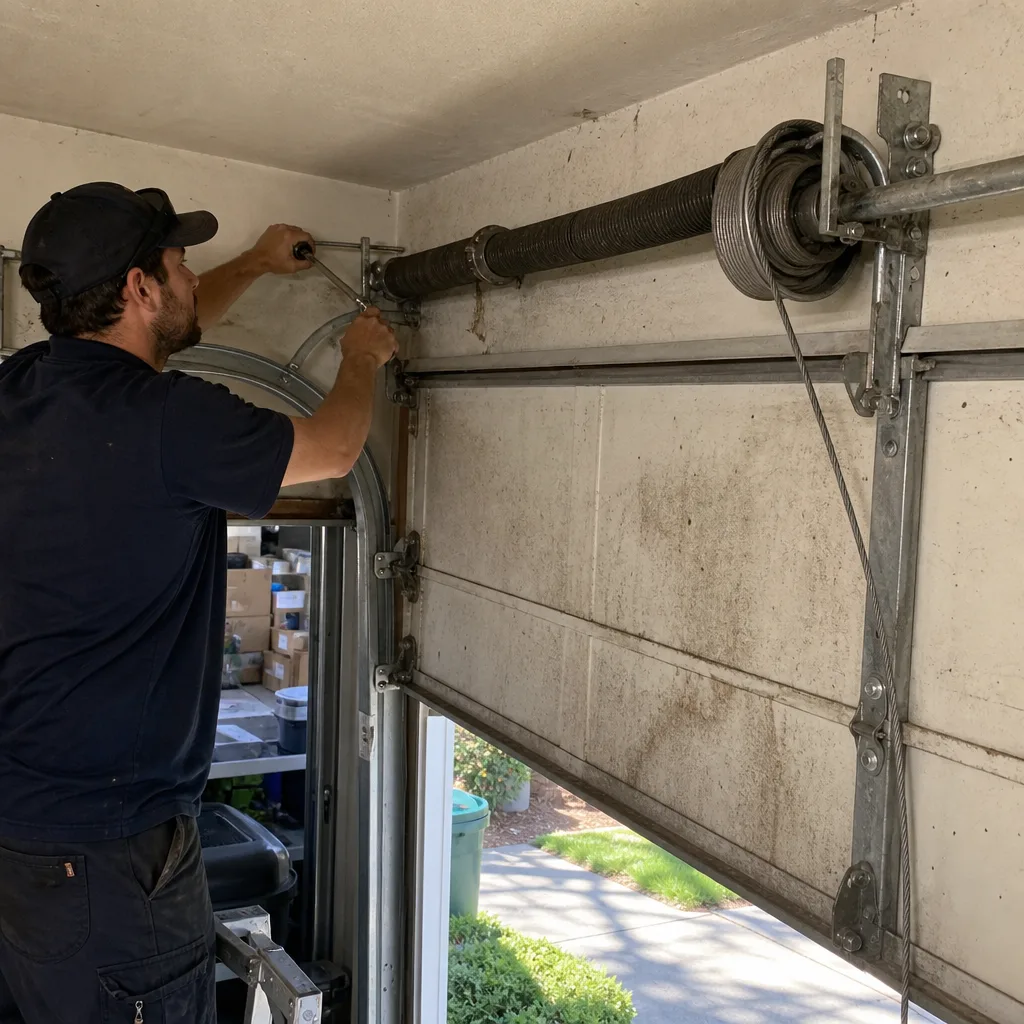 Before
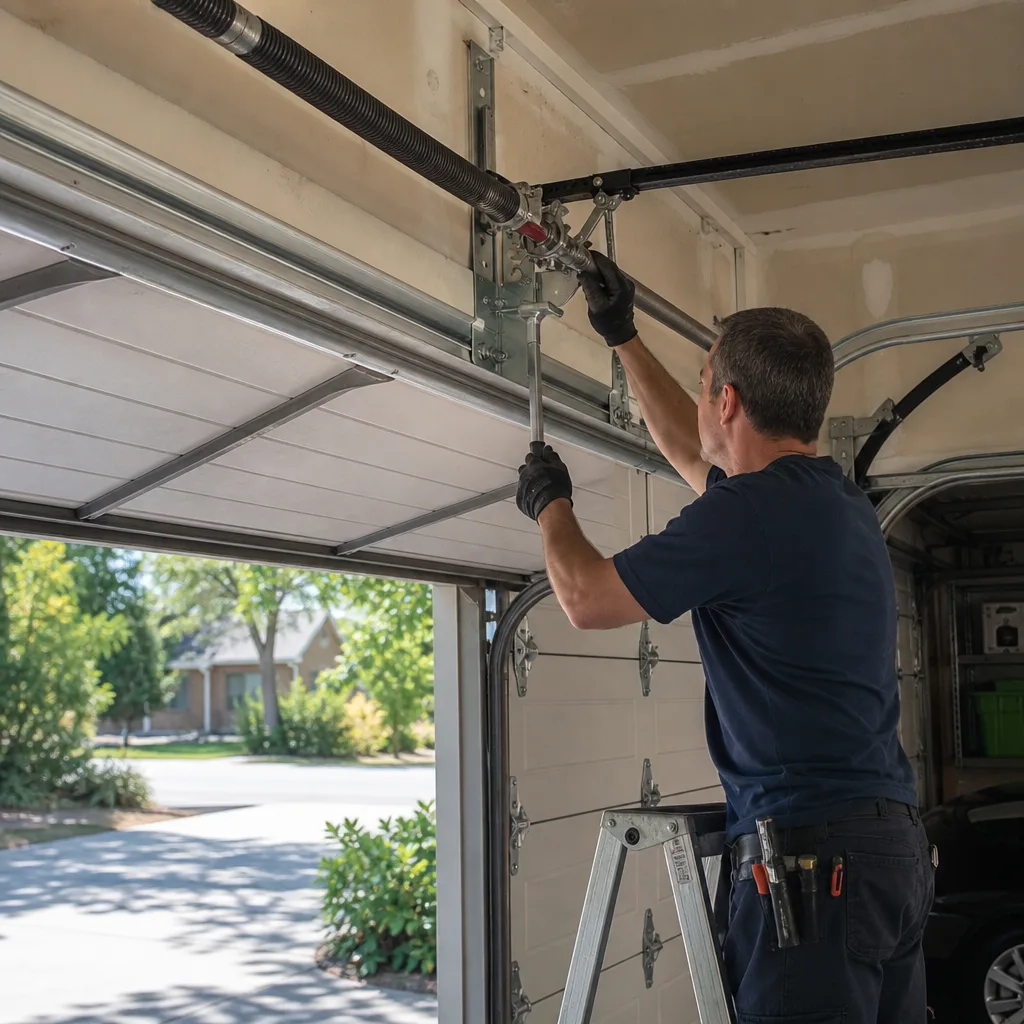 After
After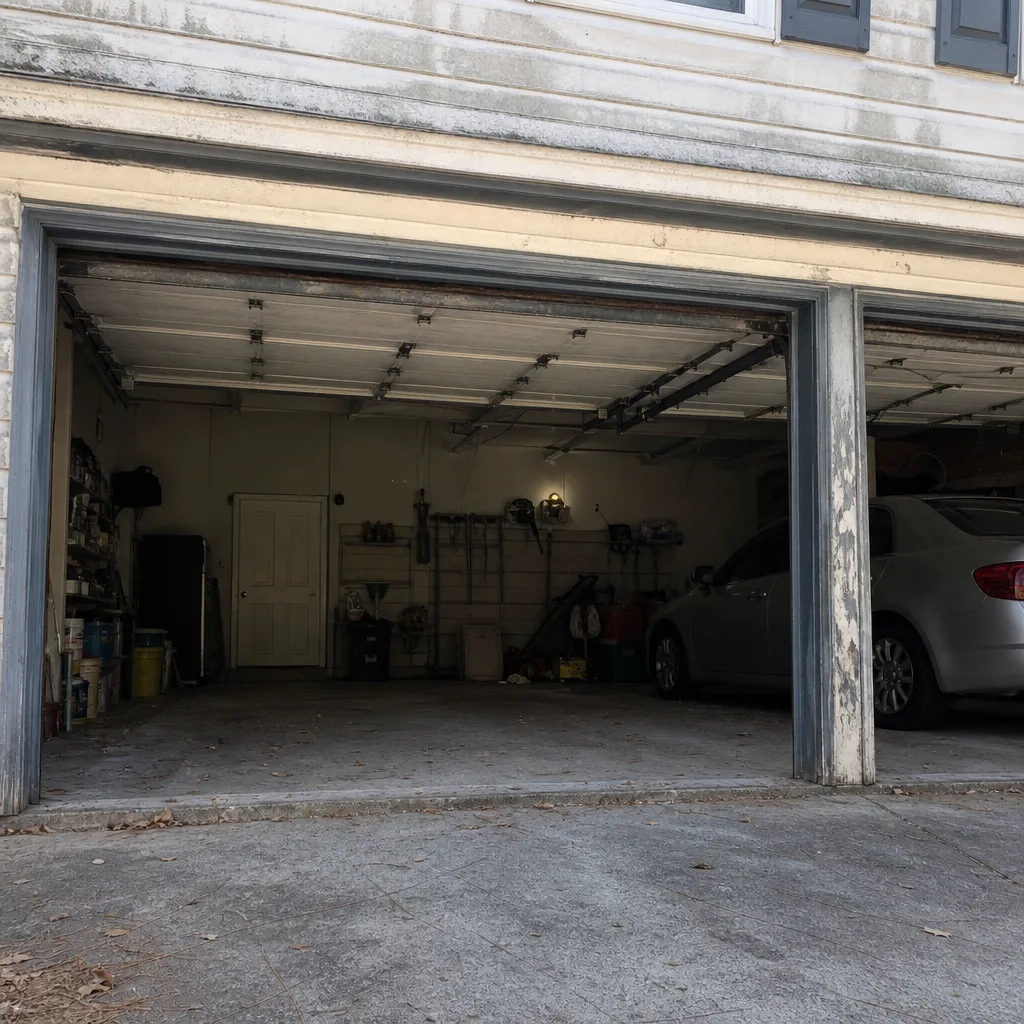 Before
 After
AfterGarage Door Warning Signs: A Sandy Springs Homeowner’s Reference Guide
Most garage door failures in Sandy Springs don’t start with a bang. They start with a scrape on Tuesday, a hesitation on Thursday, and a door that closes fine the other five days. Homeowners in Dunwoody, Riverside, and the neighborhoods off Roswell Road tell us the same thing: they waited because the problem was intermittent. Then the spring broke at 10:40 PM with the car inside. This guide gives you a symptom-to-cause reference table, the diagnostic value of intermittency, and the documentation method that makes a diagnostic visit decisive instead of exploratory. For a broader overview, see The Complete Guide to Garage Door in Sandy Springs. You’ll learn what to photograph, what to listen for, and exactly which sounds map to which garage door repair costs in Sandy Springs.
Quick Answer
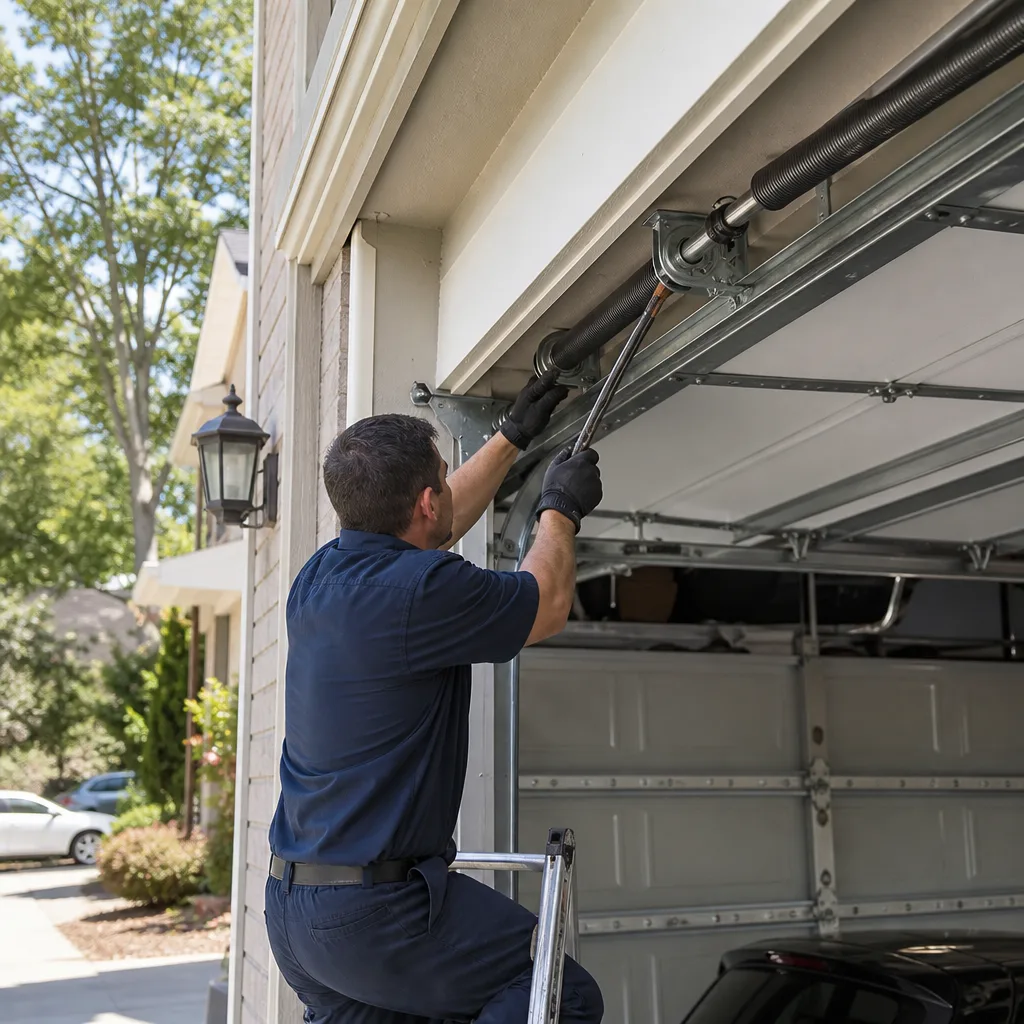
The most common garage door warning signs in Sandy Springs are a door that reverses mid-cycle, a grinding or squealing sound that changes with temperature, a door that sags on one side, and a visible gap in a torsion spring. Any one of these indicates a component is measurably worn, not “acting up.” Document the symptom with a time-stamped photo or short video before you call, because a problem that appears once and vanishes is the most useful piece of diagnostic information you can hand a technician.
Table of Contents
- The Symptom-to-Cause Reference Table
- Why Intermittency Is the Warning, Not the Exception
- The Specific Sounds That Distinguish a Spring, Roller, or Drum Problem
- Stop-Use Warning Signs vs. Monitor-for-Two-Weeks Signs
- How to Photograph and Document a Warning Sign Before You Call
- What Sandy Springs Climate and Housing Stock Mean for Your Door
- Common Mistakes to Avoid
- When to Call a Professional
BeforeAfterThe Symptom-to-Cause Reference Table
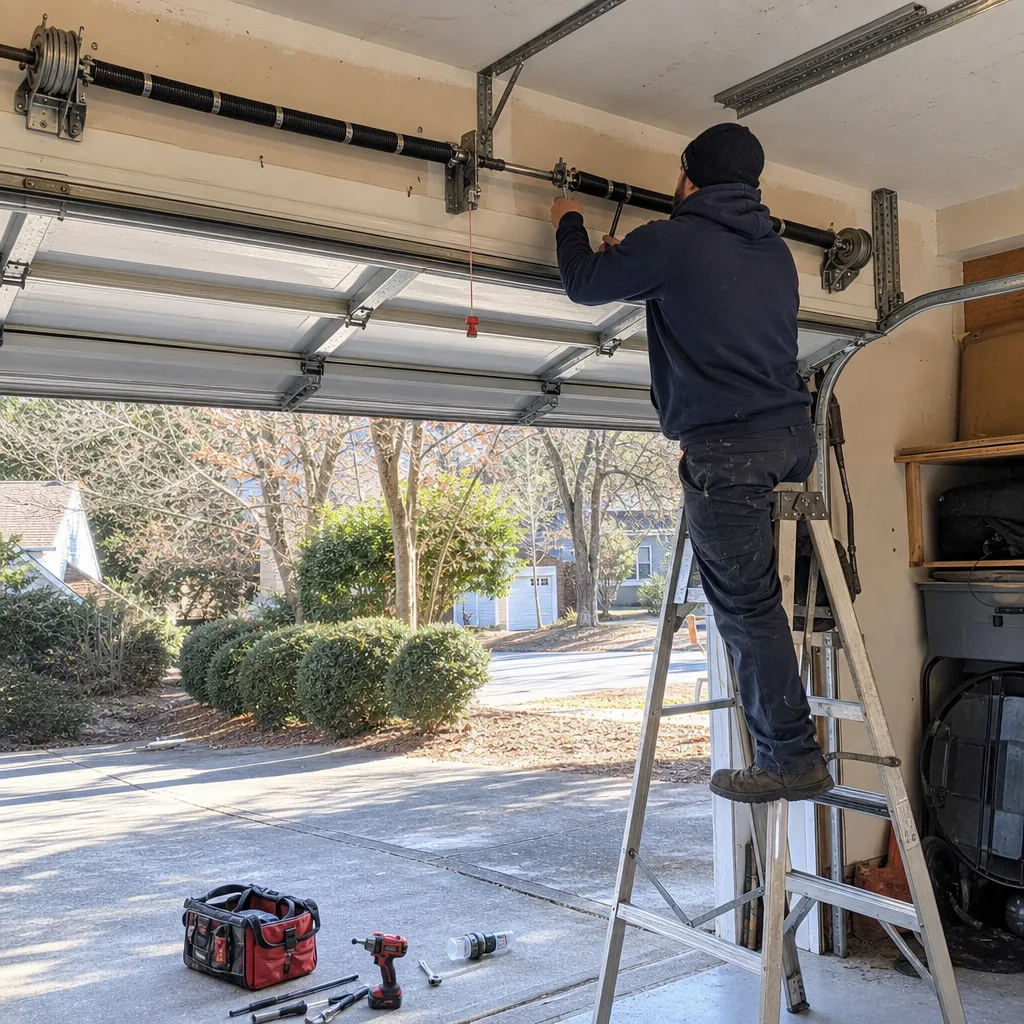
Every warning sign maps to a mechanical cause. When you can name the likely culprit before the technician arrives, the diagnostic conversation changes from “something’s wrong” to “here’s what I observed.” That saves a visit. Here is the reference table we use internally at Servo Garage Doors Sandy Springs home office. Use it to narrow the problem.
| Symptom | Most Probable Cause | Secondary Possibilities |
|---|---|---|
| Door reverses immediately after touching the floor | Downward travel limit set too low | Debris on the floor sensor, bent track at the lower bracket, worn close-force sensitivity setting |
| Door reverses 6-12 inches before closing | Safety sensor beam misaligned or dirty | Sensor wire loose at the logic board, direct sunlight blinding one sensor eye in the afternoon |
| Loud bang followed by door not moving at all | Torsion spring broken (clean break visible at the coil) | Cable snapped if spring was intact, opener carriage tooth stripped from over-torque |
| Grinding sound, door moves slowly | Worn steel roller bearings, no nylon coating left | Dried-out roller stems dragging in the hinge barrel, opener gear wear if sound is at the motor head |
| Door sags visibly on one side when half open | Torsion spring imbalance (one spring carrying more than the other) or a failing extension spring on that side | Loose lift cable on that side, worn end bearing plate |
| Door jerks or jumps in the track at a specific point | Bent horizontal track section where the roller catches | Loose track bolt that lets the track flex inward, hinge with a seized pin |
| Squealing or scratching that is worse in cold weather | Torsion spring coils rubbing against the shaft when cold causes the steel to contract | Dry center bearing plate, roller bearing without grease |
| Door opens unevenly, one side lifts before the other | Lift cable off the drum, drum setscrew loosened | One torsion spring weakened, extension cable stretched on one side |
One point that doesn’t fit in a table cell: a door that makes noise only in the first three feet of travel is not the same problem as a door that makes noise in the last three feet. On a sectional door, the panels travel through the curved track at the top during the first third of the opening cycle. If the noise is at the top of travel, it’s the rollers in the curved track or the drums above. If the noise is at the bottom of travel, it’s the lower track, the bottom bracket, or the cable. Write down where in the travel the sound happens. It cuts the diagnostic list in half.
Why Intermittency Is the Warning, Not the Exception
Here’s the sentence we say most often in Sandy Springs kitchens: “It worked fine this morning.” We know. Intermittent is what most garage door failures look like before they become permanent. The reason is mechanical. Most components don’t fail catastrophically. They drift. A travel limit is a worm-gear adjustment. A sensor eye is an alignment bracket. A spring is a steel coil that loses tension incrementally, one fraction of a degree of arc per cycle, until one morning it has lost enough to let the door be heavier than the opener can lift on a cold day.
Intermittency is diagnostically more useful than a consistent problem, not less. A consistent problem means something has already failed. An intermittent problem means something is in the process of failing, which gives you time. It also gives the technician a pattern to match. Here’s what to log:
- Time of day - morning cold versus afternoon heat changes steel dimensions by measurable amounts. A torsion spring is stiffer at 38°F than at 82°F. A sensor eye blinded by 3:00 PM sun will work fine at 9:00 AM.
- Temperature outside - track expansion, lubricant viscosity, spring modulus all shift with temperature. Sandy Springs’ freeze-thaw cycles in January and February make this the single most useful data point for intermittent noise.
- Door position when the symptom occurred - fully open, fully closed, or mid-travel at a specific panel. Know this and you’ll usually know whether the problem is the spring, the rollers, the track, or the opener.
- Whether the door was opened manually or with the opener - if you pull the red emergency release cord and the door is smooth by hand but jerky with the opener, the door is fine and the opener is the problem. Most homeowners don’t think to test this.
- Sound description in three words - “metal-on-metal scrape,” “rubber thump,” “high-pitched squeal.” Each of those is a different component class. Write the three words down. Don’t edit them into something more general.
Here’s the pattern we see. In Sandy Springs, the morning after a cold snap, torsion springs that were within tolerance in October fail at 6:45 AM when the garage is 39°F and the spring steel has lost its flex. The symptom that preceded it was intermittent: the door “felt heavy” three mornings in November, then fine for two weeks. That heaviness was the spring losing a coil of tension. It came and went because the temperature came and went. Intermittent heaviness is never a fluke. It’s a data point. Log it.
The Specific Sounds That Distinguish a Spring, Roller, or Drum Problem
“Grinding noise” describes three different repair bills. The good news is that they don’t sound alike if you listen for the right quality. Here’s how to tell them apart. This section is worth reading twice, because the difference between a $22 roller replacement and a $400 spring replacement in Sandy Springs is sometimes just the frequency and pitch of the sound.
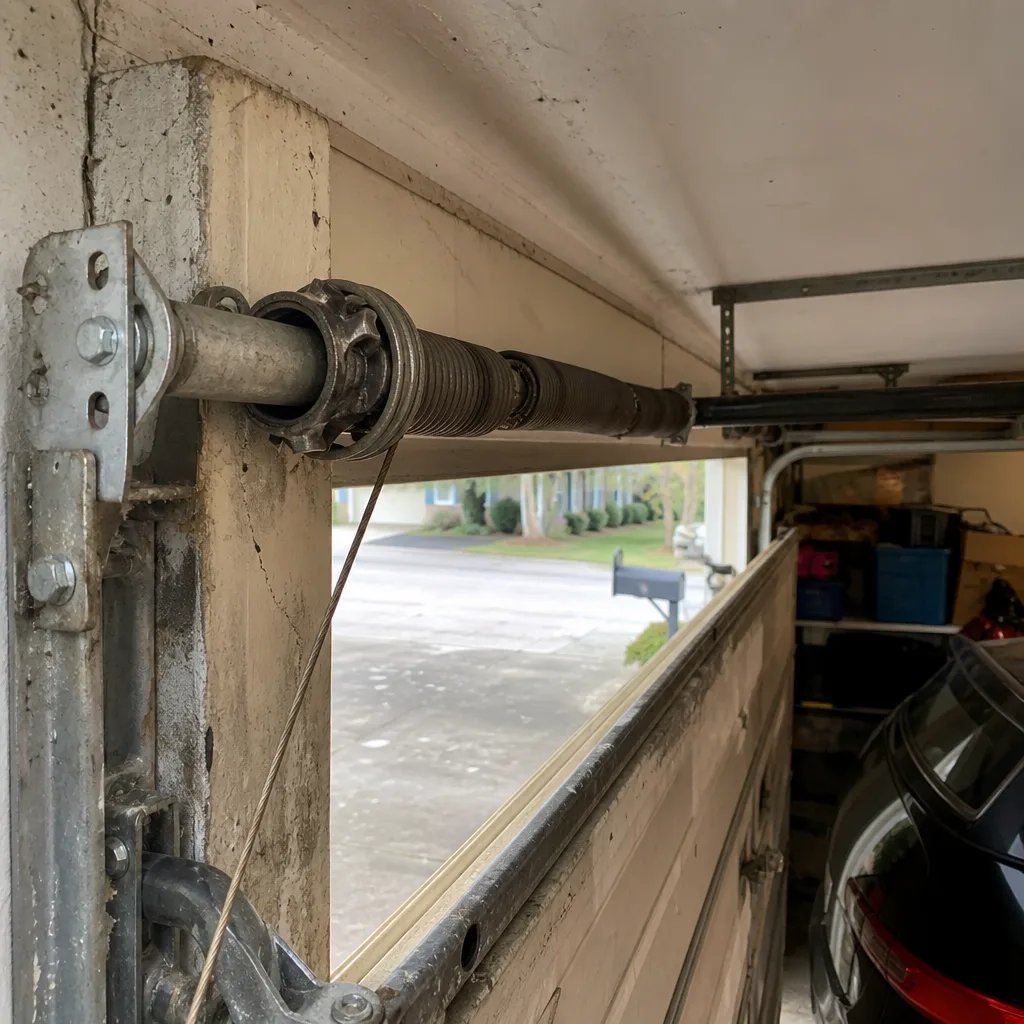
Worn spring: A loose, low-pitched rumble or a “sproing” twang when the door is at the top of travel, near the torsion tube. You’ll sometimes see a visible gap in the coils, but not always. The sound comes from the shaft above the door, not the track. If you stand in the center of the garage and the noise seems to come from overhead and slightly behind the door’s upper edge, it’s a spring or a bearing plate. A torsion spring under tension stores enough energy to kill or maim; do not touch it. This is a stop-use and call condition.
Worn roller: A higher-pitched, rhythmic rasp or squeal that moves with the door. If you watch the door move, the sound pulses at each roller position. On a Clopay or Amarr residential door with seven or eight panels, there are 14 or 16 rollers. A single failing roller produces a pulse every time it passes through the curved track at the top. If the sound is steady but pulsing in sync with the panel passing the curve, it’s a roller. This is the cheapest fix and the easiest to misdiagnose as something expensive.
Loose torsion drum: A clicking or tapping at the very top of the door, usually one side only. The drum is the cable spool at each end of the torsion shaft. When its setscrew loosens, the drum slips one notch per cycle, producing a sharp tick at a specific point in travel. This sound is consistent, not intermittent, and it is dangerous because a slipping drum drops the cable tension unevenly across the door. If you hear a tick at the top of travel at exactly the same point every time, call for Garage Door Repair in Sandy Springs before the cable comes off the drum entirely.
Opener gear: A steady, machinery-grinding sound from the motor head itself, not from the door. The Chamberlain and Genie AC-motor openers use a plastic gear inside the powerhead that wears down to a nub over time. When it’s gone, the motor spins but the chain doesn’t move. If the sound is coming from the metal box on the ceiling, not the door in the track, it’s the opener’s internal gear train. That’s an opener replacement or gear service, not a door repair.
Here’s a field shortcut we’ve used for a decade. Put your hand flat on the metal track while the door moves. A vibration at the same frequency as the sound means the noise is in the track or rollers. No vibration in the track and a sound that seems to float near the shaft means the sound is in the spring or drum assembly. You can feel the difference in five seconds.
Stop-Use Warning Signs vs. Monitor-for-Two-Weeks Signs
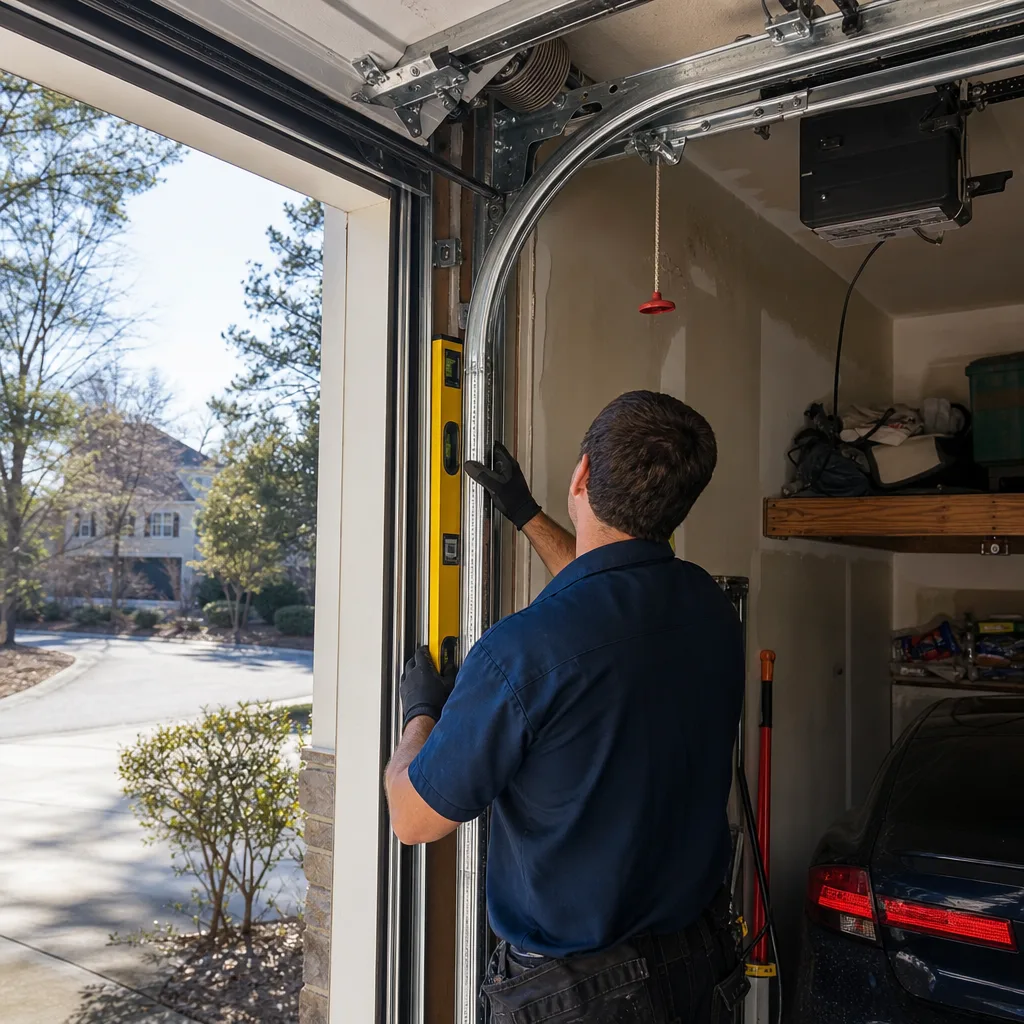
Some warning signs mean “schedule service this month.” Others mean “do not operate this door again until a professional has looked at it.” The distinction matters because an active safety risk cannot be monitored. It has to be stopped. Here’s the breakdown.
Stop-use conditions - do not operate the door:
- Visible break in a torsion spring. Count the spring coils. If there is a ½-inch gap anywhere along the coil, the spring is broken. A torsion spring stores hundreds of pounds of torque. Even a broken spring can still have tension in the unbroken sections and the winding cone can slip. Do not open the door with the opener. Do not stand directly under the spring line.
- Frayed or unraveling lift cable. The lift cables are the two steel cables that run vertically along each side of the door near the bottom bracket. If you see individual steel strands separating from the cable body, the cable is about to fail. A cable that fails under load drops the door’s full weight onto whatever is beneath it, typically the hood of a car or a person. Stop use immediately.
- Safety sensor failure with the door closing anyway. Test this by blocking the sensor beam with a broom handle while the door is closing. If the door does not reverse within six inches of contacting the blockage, the auto-reverse is not working. This is a code issue more than a wear issue. A garage door that doesn’t auto-reverse is a legal and safety hazard under CPSC requirements. Disable the opener and use the manual emergency release until the sensor is replaced.
- Door visibly off-level by more than an inch at the halfway point. If one side of the door is higher than the other when the door is halfway open, a cable or spring has lost tension on one side. The continued operation strips the hinges on the low side and can pull the door out of the track entirely.
Monitor-for-one-to-two-weeks conditions - safe to operate with attention:
- Intermittent squeal at the top of travel only in cold weather - if the sound stops when the weather warms, you likely have a dry bearing plate or spring coil rubbing the shaft. Lubrication and adjustment can wait a week or two. Log the temperature when it happens.
- Single pulse of grinding at one roller position - one worn roller is not an emergency. The door can operate normally until the roller is replaced. Watch for the pulse getting louder or more frequent.
- Slow close that resolves once the door passes the halfway point - this often indicates a partially worn opener gear or a balance shift that the opener is straining against. If the door still opens reliably, you have time to schedule replacement.
- Remote works only at close range - a weak remote battery or an LED bulb interfering with the receiver frequency. Not mechanical, not urgent. Fix the bulb or battery before you call anyone.
The rule is simple: if the failed component is under spring or cable tension, it’s a stop-use. If the failed component just makes noise, it’s monitor-and-schedule. Tension is the line between inconvenient and dangerous.
How to Photograph and Document a Warning Sign Before You Call
Here’s what changes the diagnostic conversation. Before you call a garage door company, take three photos and one video. This is the evidence-first approach that we built into The Haven Standard’s Clause 4: the customer sees the failed part before anyone quotes a replacement. When you can show a technician a photo of the specific component, the phone call goes from a general inquiry to a scoped diagnosis.
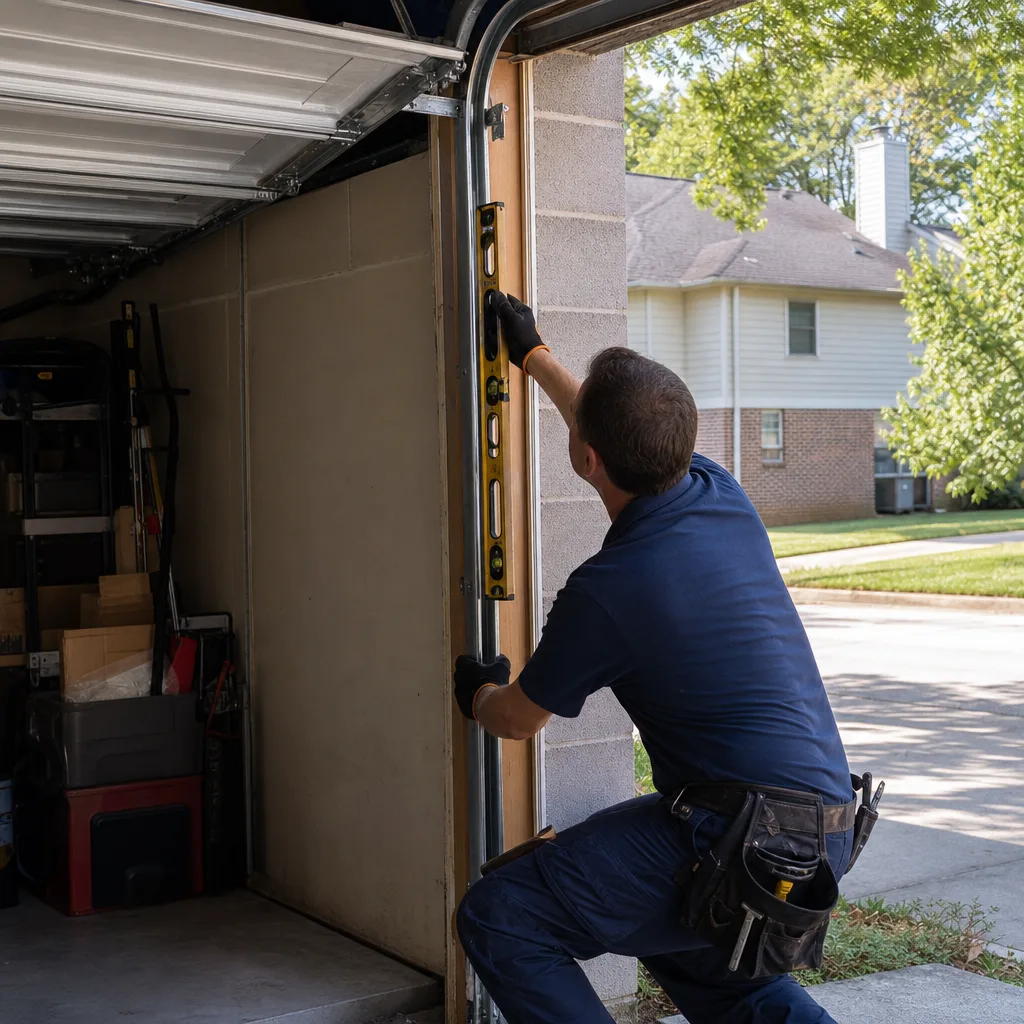
- Photo 1: The full door, straight on, door closed. Stand far enough back to capture the entire door and both side tracks. This shows sag, panel alignment, and any visible gap at the bottom. Use a level if you have one and hold it against the door in the photo for scale reference if sag is the symptom.
- Photo 2: The spring shaft and the area directly above the door, angled up. If the spring is broken, the gap will be visible in this shot. If you have two springs (most Sandy Springs doors over 16 feet wide do), photograph both ends of both springs. A crack can hide at the winding cone or against the center bearing plate.
- Photo 3: The bottom bracket and vertical cable on each side. Kneel down, photograph from below, looking up the cable line. Fraying is often visible only from a low angle with backlighting. Do not touch the cable; photograph it only.
- Video: One complete open and close cycle, 10 feet from the door, holding the phone in landscape orientation. Narrate what you hear as it moves: “grinding at the top, clicking on the left side, smooth at the bottom.” The video captures the phase of travel where the sound occurs, which is the single most diagnostic variable.
One more documentation step. If the symptom is intermittent, write it down on a 3×5 card and tape it to the inside of the garage door jamb. Time, temperature, door position, sound descriptor. When the technician arrives, the card is there. Memory is unreliable for intermittent symptoms. A written log is not. This is the same reason we photograph every failed component and hand the customer a written record before we leave: documentation removes the “I think it was” uncertainty from the conversation.
What Sandy Springs Climate and Housing Stock Mean for Your Door
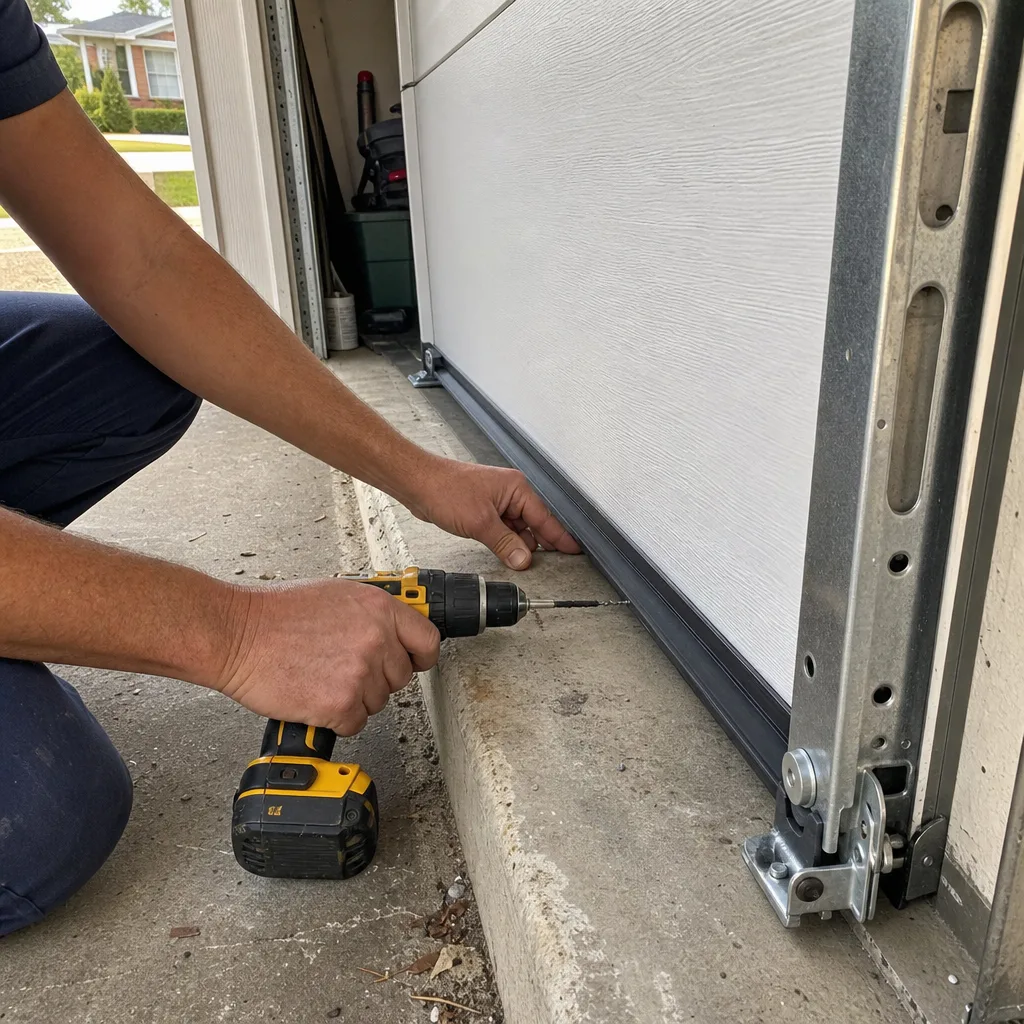
Sandy Springs garage doors fail in predictable ways because of two local factors: Georgia humidity and 1980s-to-2010s suburban housing stock. The humidity matters more than most homeowners realize. Sandy Springs sits in USDA hardiness zone 7b/8a, which means summer dew points in the 70s, winter freeze-thaw cycles on the heavy side, and a long pollen season from late February to early May. Here’s what that does to specific components.
Roller bearings and hinges: The humidity oxidizes the bearing surfaces, and the pollen forms a paste with old lubricant. A steel roller in an uninsulated garage in Dunwoody goes from smooth to gritty in about four years. Nylon-coated rollers last longer, but the bearing inside is still a steel ball race. If your door was installed before 2015 and has never had the rollers replaced, they are overdue. In our experience in the Riverside and Chastain Park area, the original builder-grade rollers on homes built between 1995 and 2005 are the single most common door component we replace aside from springs.
Torsion springs: Springs are rated for a cycle count, usually 10,000 cycles for a standard residential spring. A 10,000-cycle spring on a door that opens and closes three times a day lasts about nine years. Sandy Springs households tend to use the garage as a primary entry, so three to four cycles per day is common. That puts a spring installed with the house in 2015 at the end of its service life in 2024 or 2025. If you bought your home between 2018 and 2022, the previous owner did not think about the springs. They are now on your maintenance clock.
Sensor eyes and the afternoon sun: South-facing garage doors in Sandy Springs get a direct afternoon sun beam that can blank the photoelectric safety sensor eye from about 2:30 to 5:30 PM in summer. The symptom is a door that reverses every time it tries to close during those hours, then works fine after sunset. The fix is usually as simple as shifting the sensor or adding a cardboard sun shield. Before you call anyone, check the sensor alignment and note the time of day. This one is misdiagnosed as “the opener is busted” by a lot of homeowners, and the repair visit costs money for a problem the sun caused.
Wood doors and moisture: Sandy Springs still has a stock of older custom wood doors in the established neighborhoods off Mount Vernon Highway and Long Island Drive. Wood doors absorb summer humidity and swell. A wood door that scrapes in August and frees up in December usually isn’t a track problem. It’s the door itself expanding. The fix on a wood door is different from the fix on a steel or aluminum door, so the technician needs to know which you have. Photograph the door’s inside surface before you call. It changes the diagnostic starting point.
Common Mistakes to Avoid
- Lubricating a grinding sound without diagnosing the cause first. Spray lubricant on a failing roller temporarily quiets the bearing and masks the sound, not the failure. The roller still fails; it just fails silently. If you lubricate, note what you used and when, so the technician knows what’s hiding under there.
- Ignoring a reverse-at-the-bottom because “the door closed fine the last three times.” The travel limit is a screw-thread adjustment that has drifted below where the door should stop. Every cycle you force it closed is another cycle of stress on the opener gear and the panel hinges. This one compounds.
- Assuming a broken spring means the whole door needs replacement. A Broken torsion spring on an otherwise sound door in Sandy Springs is a spring replacement job, not a door replacement. Some contractors will tell you otherwise because a door replacement is a bigger invoice. A spring replacement on a standard 16×7 door runs $250 to $400 parts and labor in this market. A full door replacement is $1,200 to $3,500. Know the difference before you open the door to a sales pitch. At Servo Garage Doors Sandy Springs, Clause 1 of The Haven Standard means you’ll get a written price and scope before any work starts, and Clause 4 means you’ll see the failed spring photographed before we quote the replacement. If another contractor wants to quote you a new door, ask them to show you the failed component first.
- Operating the door with visibly frayed cables because “it’s still holding.” The cable is not “still holding.” It is failing strand by strand, and the remaining strands are taking more than their rated load. When it goes, the door drops. This is a $80 to $180 cable replacement in Sandy Springs. The repair cost does not justify the risk of waiting.
- Testing auto-reverse with your hand or foot instead of a rigid object. This one gets people hurt. The CPSC has mandated auto-reverse on garage door openers since 1993 for a reason. Test it with a roll of paper towels or a 2×4, never your body. If you’ve been using your hand to test it and it stopped reversing, you already know how close that call was.
- Replacing the opener when the problem is the door’s balance. An opener is a motor that moves a balanced door. If the spring has lost tension, the door is too heavy for the opener, and the opener strains until the gear strips. Replacing the opener without fixing the spring just burns out the next opener. If you’ve replaced an opener in the last five years and it’s now failing, check the spring balance first.
- Buying parts from a big-box store and installing them on a torsion system without the wind-up tooling. A torsion spring is not a DIY part. The winding cones store enough energy to break bones, and the average homeowner doesn’t own the correct winding bars. This is the single most common serious injury mechanism in residential garages nationwide. We say this not to protect the trade but to keep you out of an emergency room. Call a professional.
When to Call a Professional
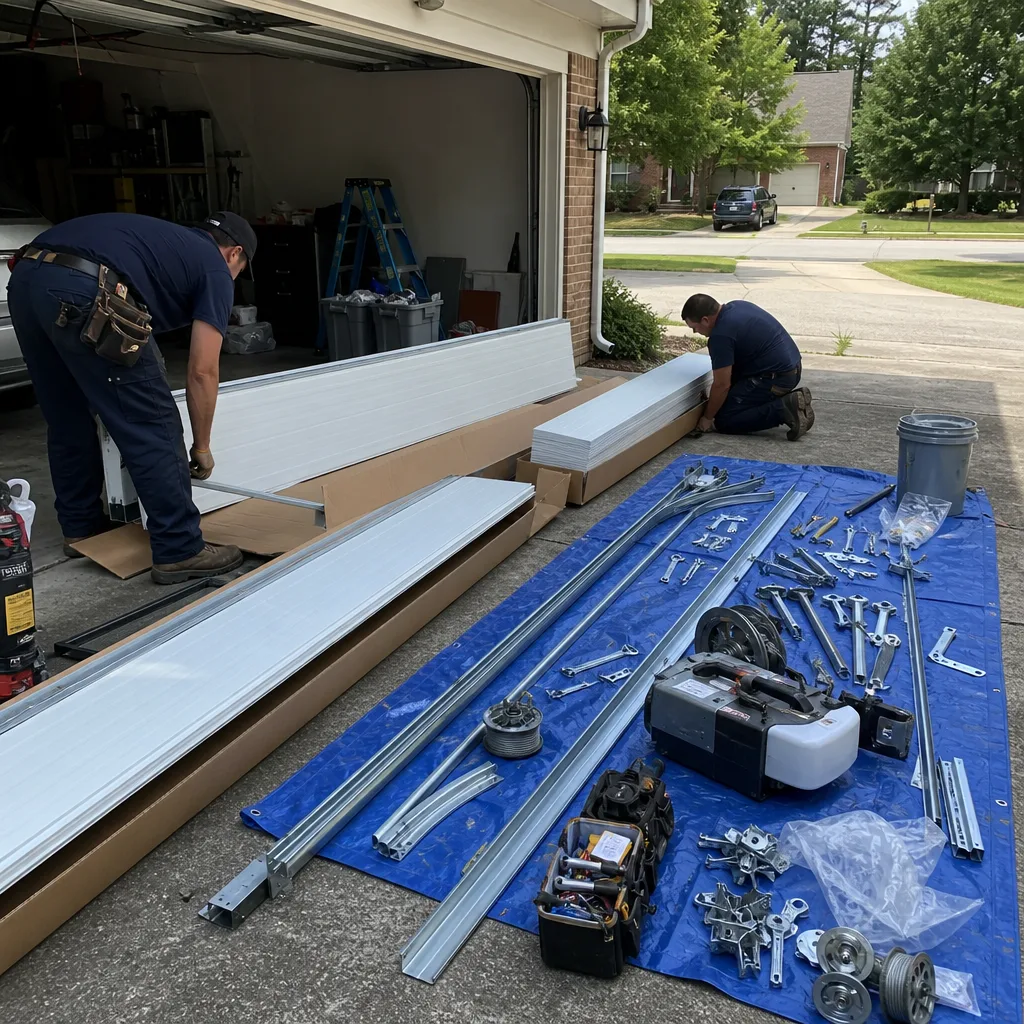
Call when the component is under spring or cable tension, when the auto-reverse has failed, or when you’ve logged the symptom and it’s getting worse. A one-time grinding pulse you’ve documented is a diagnostic visit. A door that reversed three mornings running is a scheduled repair. A door with a gap in the spring coil or a frayed cable is a stop-use call, today. Servo Garage Doors Sandy Springs offers free estimates in Sandy Springs with a flat written price and scope before any work starts. Call (470) 944-6743 and a live person answers, 24 hours a day, including holidays. We photograph the failed component before quoting the repair, so what you see is what you pay for.
Frequently Asked Questions
Standard Sandy Springs garage door repairs run $80 to $180 for cable replacement, $25 to $60 per roller replaced, $250 to $400 for a torsion spring replacement, and $150 to $350 for a track realignment or replacement. The exact price depends on the component, the door size, and the brand, but every repair at Garage Door Installation in Sandy Springs starts with a written price and scope before any work starts, never an estimate after the fact. Call (470) 944-6743 for a free estimate on your specific symptom.
Yes, for emergency stop-use situations in Sandy Springs including broken springs, dropped doors, and a car trapped inside, we dispatch a named technician with an on-the-way text. For non-emergency monitors, schedule service within one to two weeks. The call is answered by a person, not a phone tree, so you’ll know exactly when we’ll arrive. Call (470) 944-6743.
No. The price quoted in writing before the work begins is the price on the invoice after the work is done. If the diagnostic visit uncovers a second problem, we photograph it, show you the evidence, and quote that separately before proceeding. This is Clause 1 of The Haven Standard: a flat, written price and written scope before any work starts. No surprises, no upsells, no “we found something else” after the fact.
Mostly yes for standard residential doors. We keep common torsion spring sizes for 7-foot and 8-foot doors, lift cables, roller sets, hinges, and the full line of Chamberlain and Genie opener parts on board. For one-off custom components like a specific Clopay panel or an Amarr decorative hinge, we order it and schedule the return visit within days. The technician tells you which one it is before leaving.
We service all eight major brands: LiftMaster, Chamberlain, Genie, Clopay, Amarr, Wayne Dalton, Craftsman, and Raynor. For Sandy Springs homeowners with builder-installed doors from the 2000s, Chamberlain and Genie openers are the most common. For panel replacements, Clopay and Amarr are the usual makes in this market. Every brand has its own failure modes, and our technician knows the difference by the door’s cut, the roller style, and the spring color code.
Disconnect the opener using the red emergency release cord and move the door by hand. A balanced door holds its position when you let go at the halfway point, neither dropping nor lifting. If it drops, the spring is under-torqued. If it lifts, the spring is over-torqued. Any technician who replaces a torsion spring should demonstrate this test with you standing there before they pack up. At Servo Garage Doors Sandy Springs, the photo record we hand you at the end of the visit includes the before-and-after spring torque reading and a photo of the door holding mid-travel, so you don’t have to take our word for it.
The Bottom Line
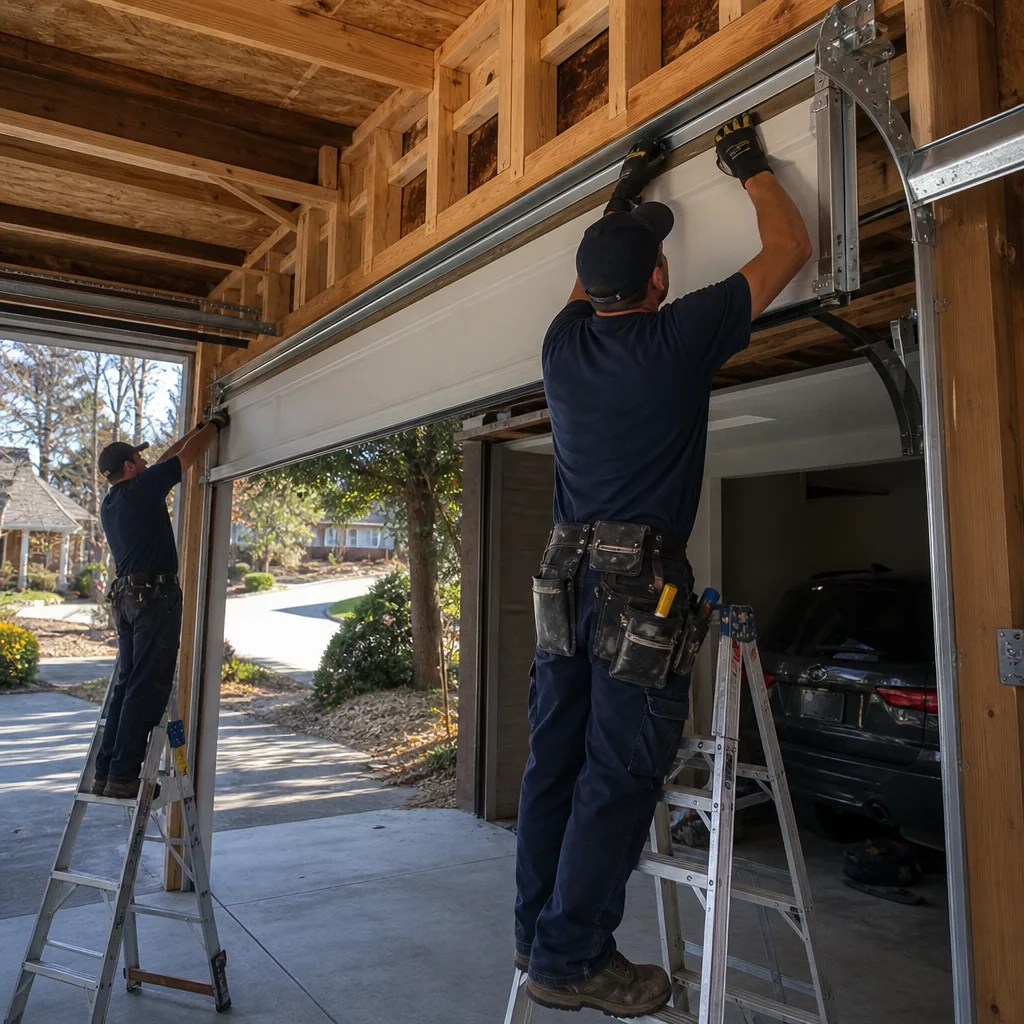
A garage door warning sign is a component telling you it has started to fail. The intermittent scrape on Tuesday is not a fluke, it’s a spring losing tension on a cold morning. The reversal at 3:00 PM is not an opener problem, it’s the Georgia sun blinding a sensor eye. Document what you see and hear, name the likely cause from the table above, and call a professional when the component is under cable or spring tension, or when the auto-reverse has failed. In Sandy Springs, every door has a service clock: springs around nine years, rollers around five, openers around a decade. When yours tells you it’s time, you’ll know what to do. And if you want the proof before you pay, that’s our entire operating model. For more guides & resources, visit our blog.
Written by Marcus Deller, Owner at Servo Garage Doors Sandy Springs, serving Sandy Springs since 2015.