
Last updated September 20, 2026
Full 25-point door and opener safety check with every visit - springs, cables, rollers, tracks, and your LiftMaster or Chamberlain opener included
You get a price before we start. It does not change when the truck arrives.
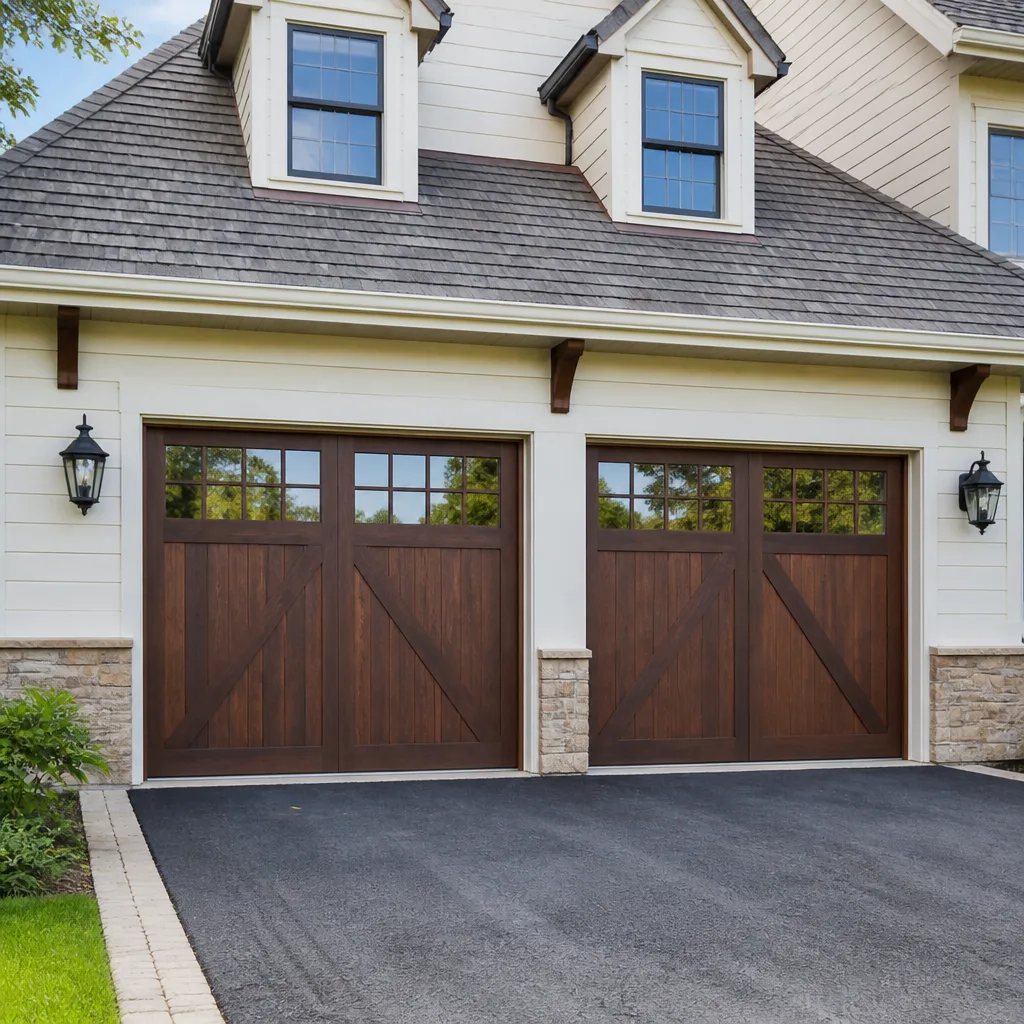
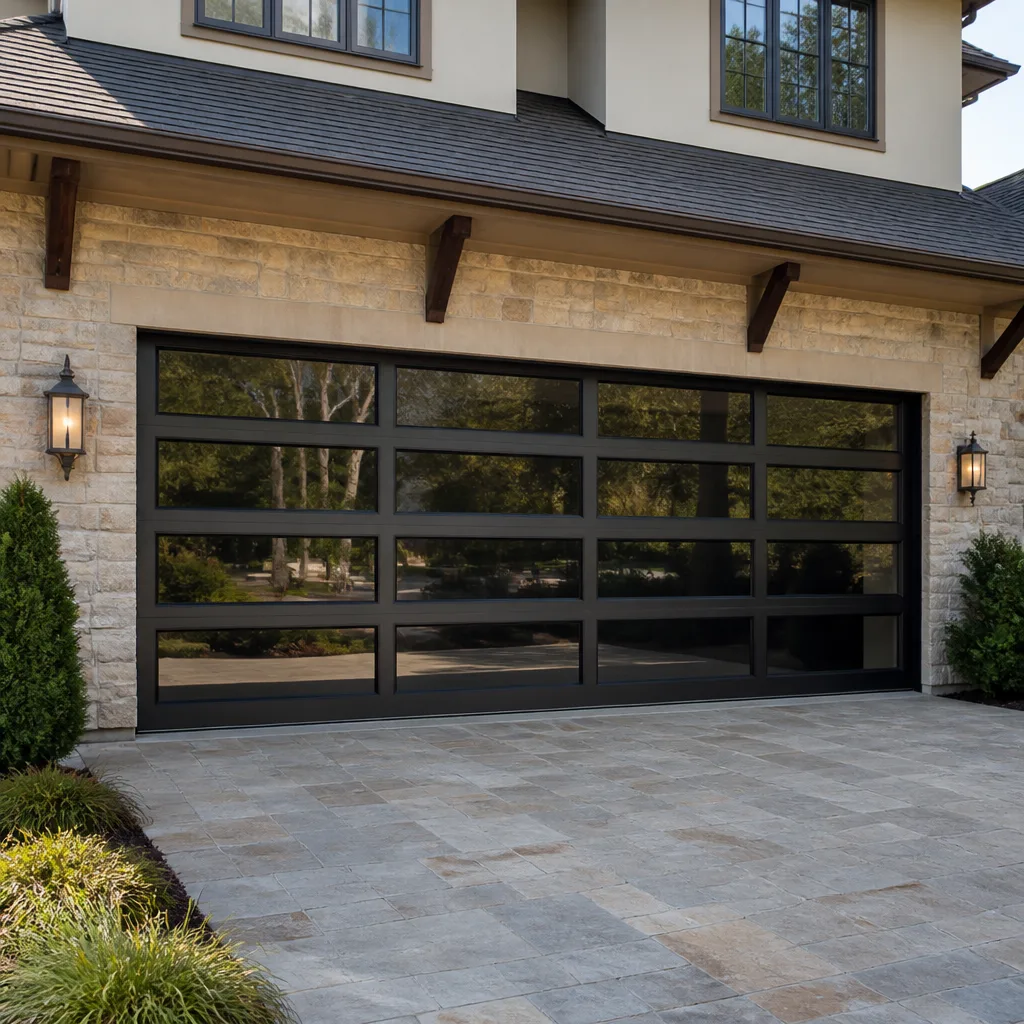
Modern flush
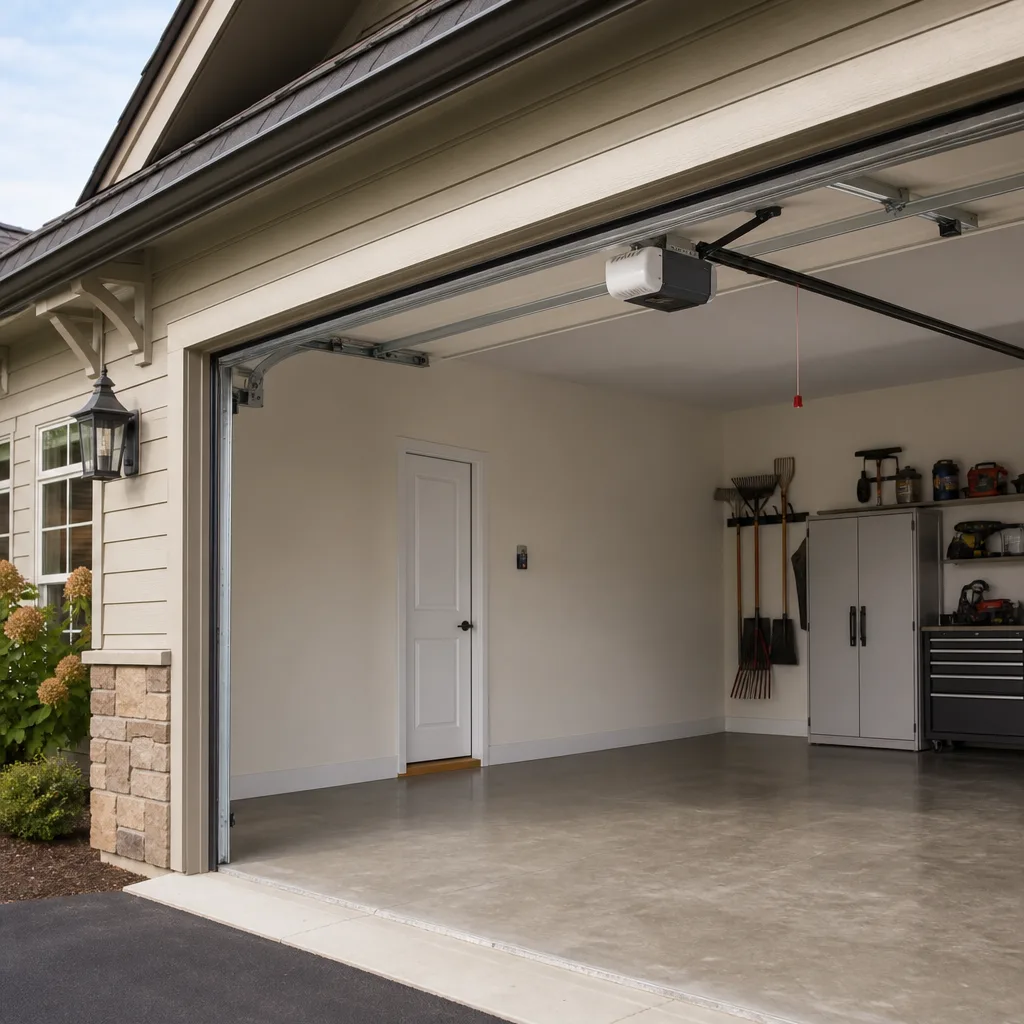
LiftMaster openers
 Before
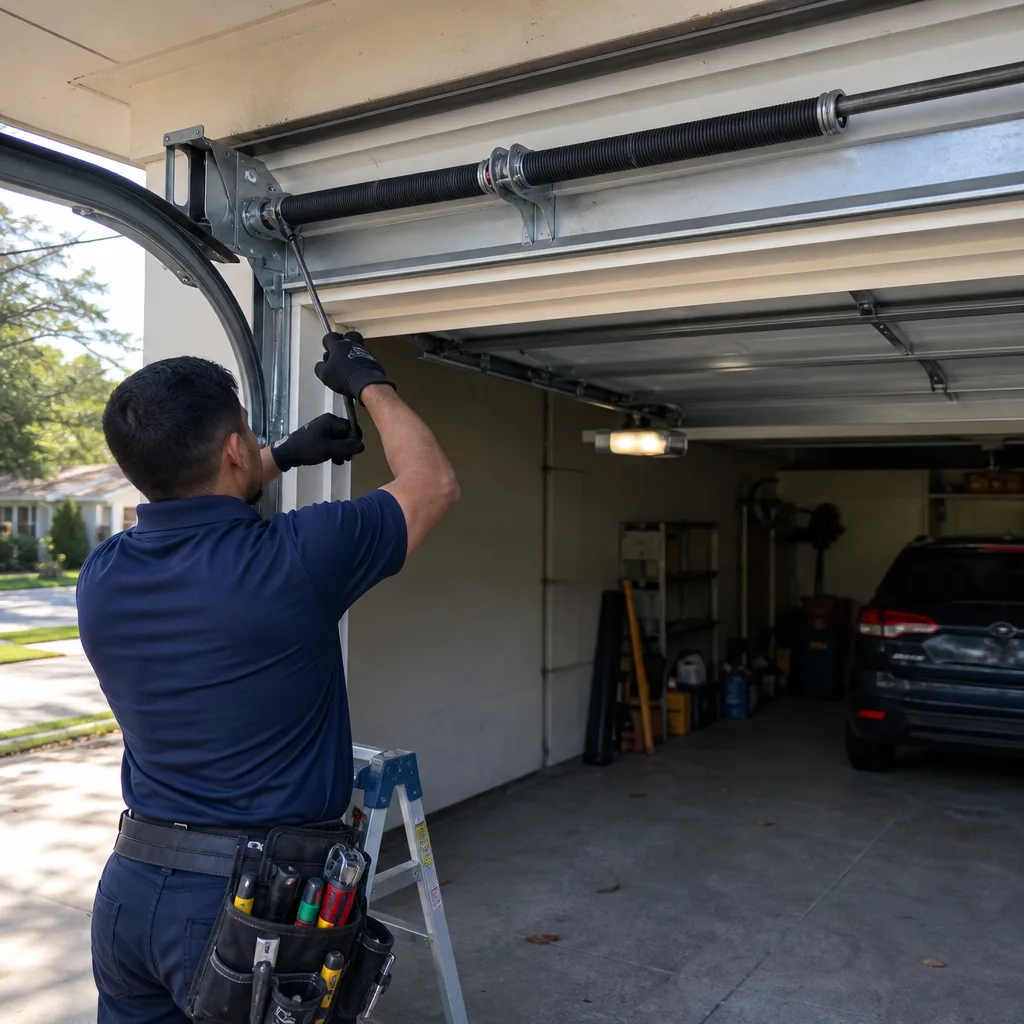 After
After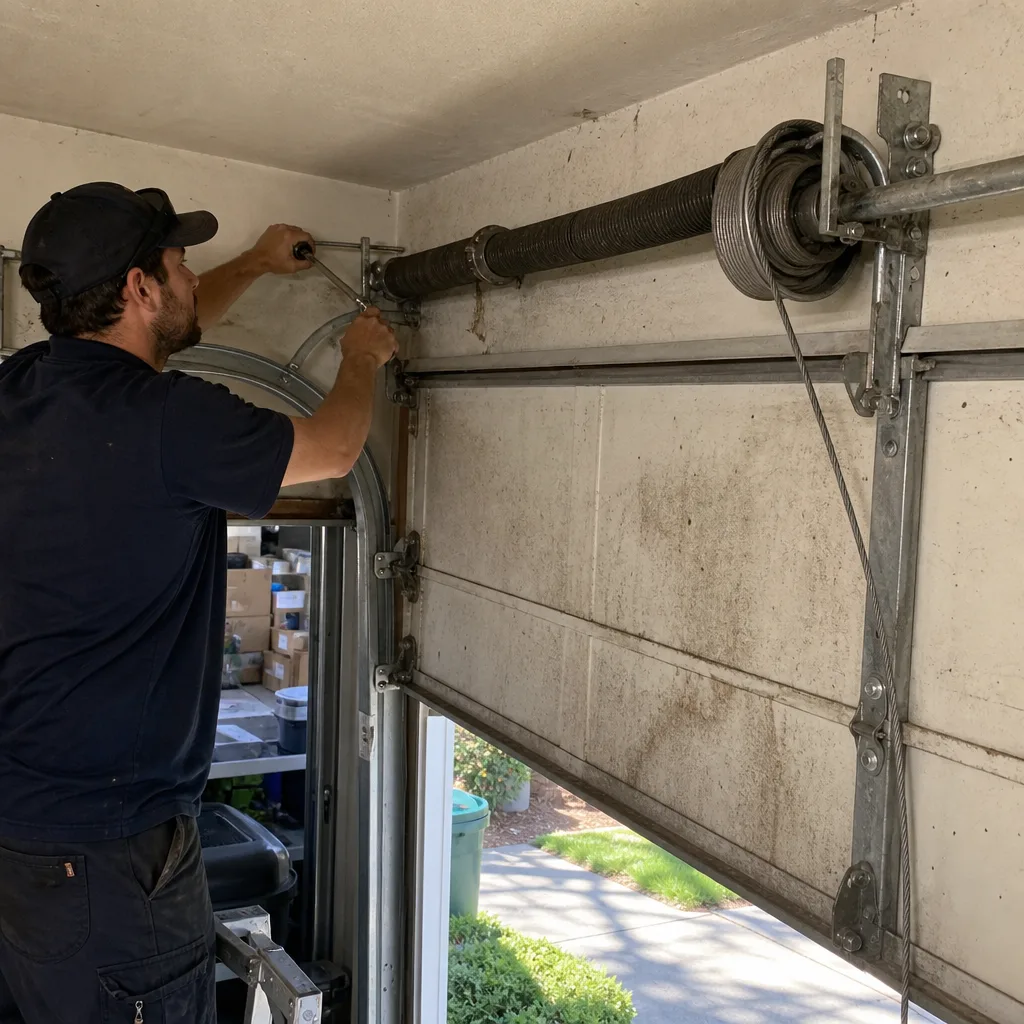 Before
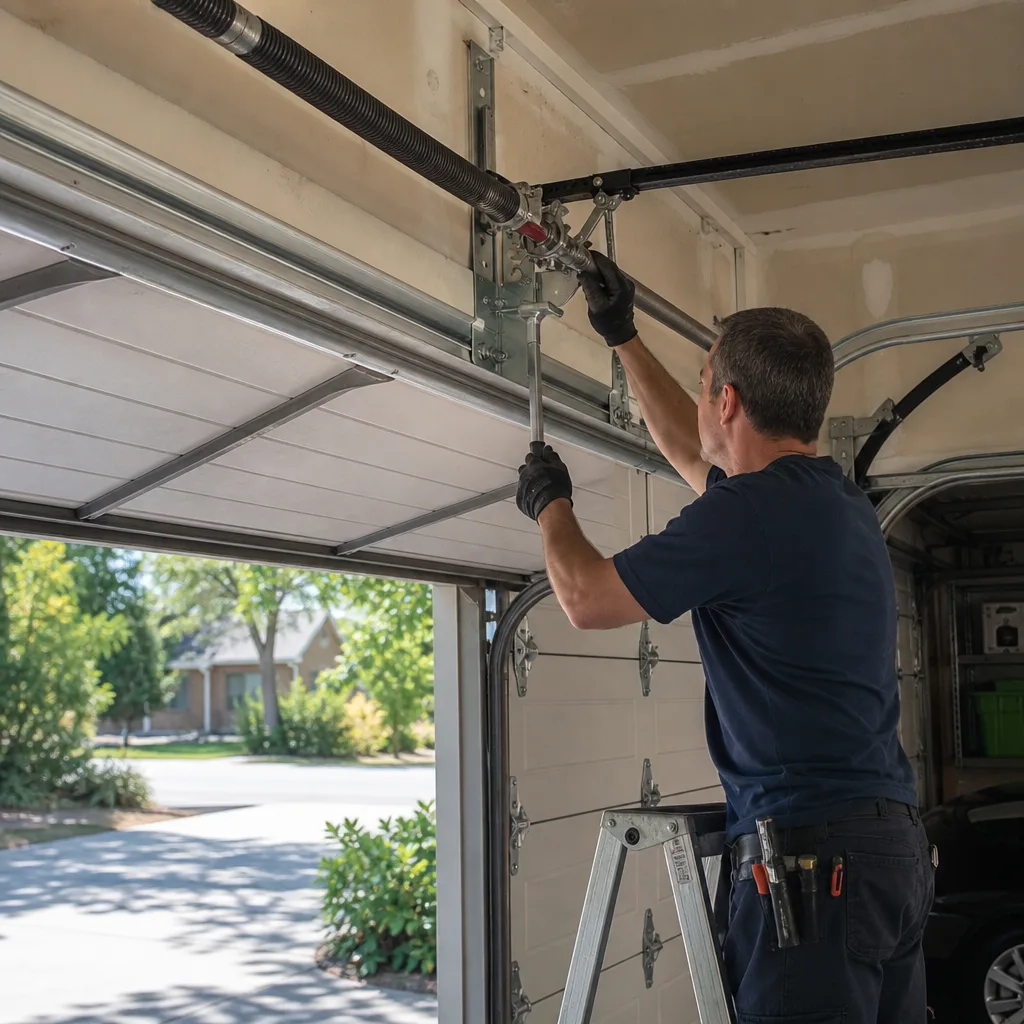 After
After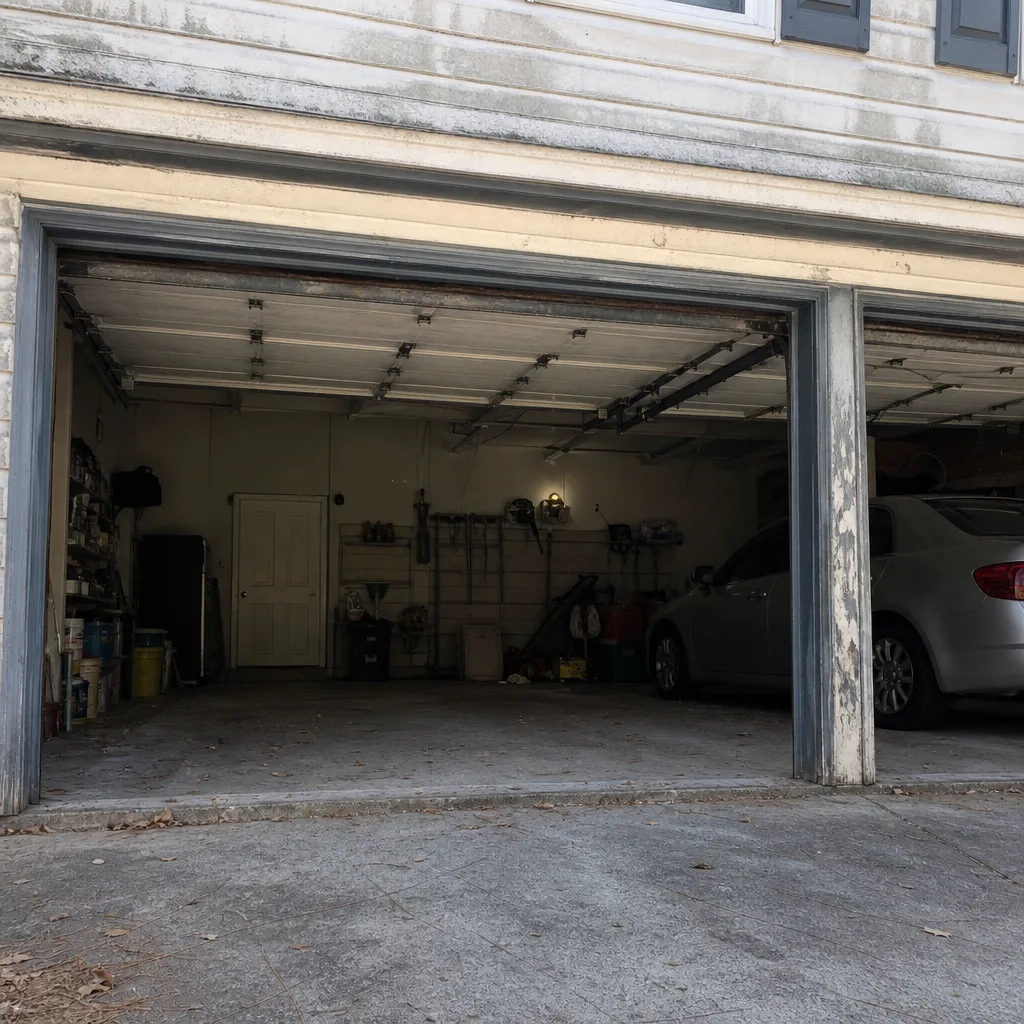 Before
 After
AfterDIY vs Professional Garage Door: The Sandy Springs Homeowner’s Decision Guide
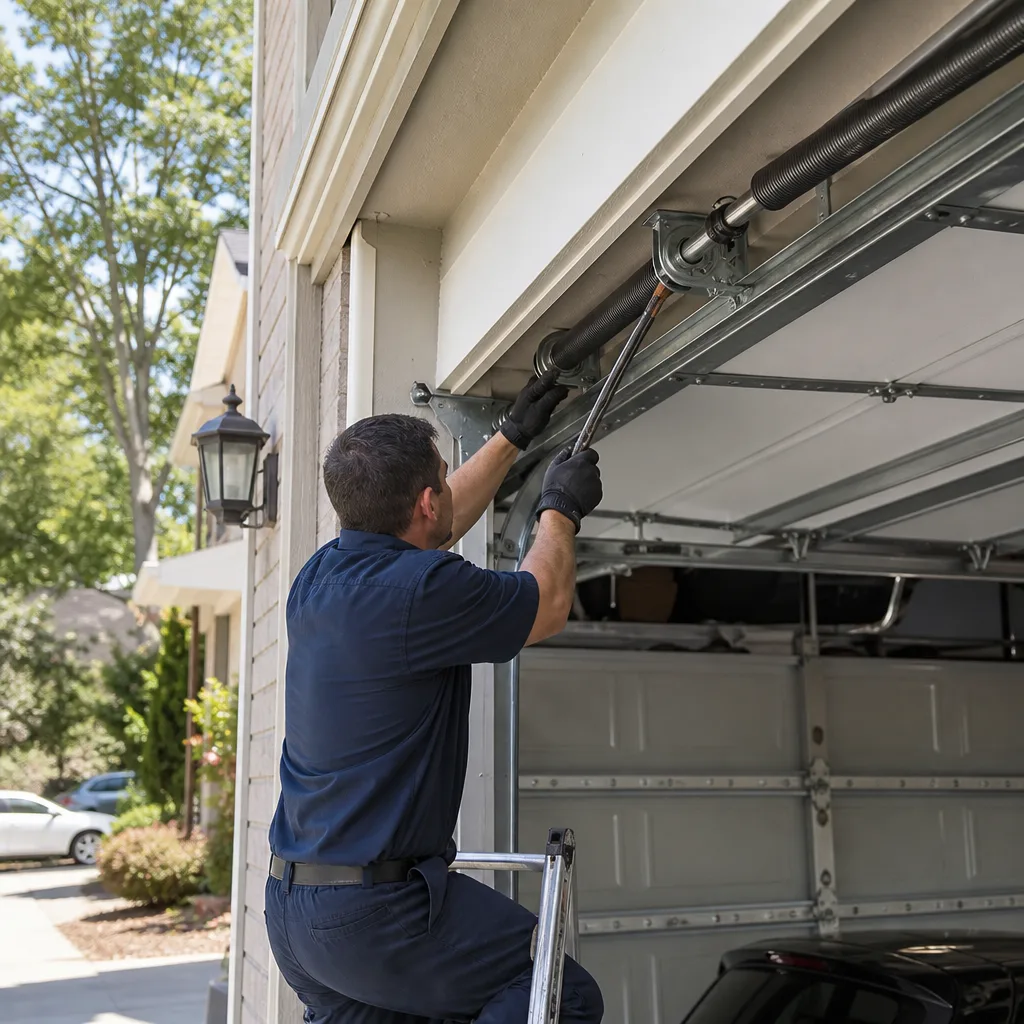
Most garage door injuries start with a homeowner who has already done the research, watched the tutorial, and bought the parts. The problem is rarely competence. It’s that the video didn’t explain what happens when a torsion spring slips off a screwdriver handle at full wind. This guide draws the DIY-versus-professional line at the component level for Sandy Springs homes, because a task you can safely do and a task that can snap your wrist are only separated by about three feet on the same door assembly. For more context on local requirements, see our Garage Door Permits, Codes & Inspections in GA: What You Need to Know. We’ll walk through what you can realistically handle on a Saturday morning, what you should not touch, and what documentation protects you either way.
Quick Answer
DIY garage door work in Sandy Springs is appropriate for three tasks: bottom seal replacement, roller replacement on extension spring systems, and opener remote reprogramming. Torsion spring replacement, cable work, and structural track repair should go to a licensed professional because the stored energy involved can cause serious injury. If the door carries a torsion spring above the header, call a professional; if it has extension springs along the horizontal tracks, you have more safe options.
Table of Contents
- The Physics That Separates Safe DIY from Dangerous DIY
- Component-by-Component DIY Viability: An Honest Table
- Torsion Springs vs Extension Springs: Why the Difference Matters
- The Three Tasks a Capable Homeowner Can Genuinely Handle
- Is the Door Out of Alignment Because of Hardware or Header?
- What to Document Before You Touch Anything
- Common Mistakes to Avoid
- When to Call a Professional
- Frequently Asked Questions
- The Bottom Line
BeforeAfterThe Physics That Separates Safe DIY from Dangerous DIY
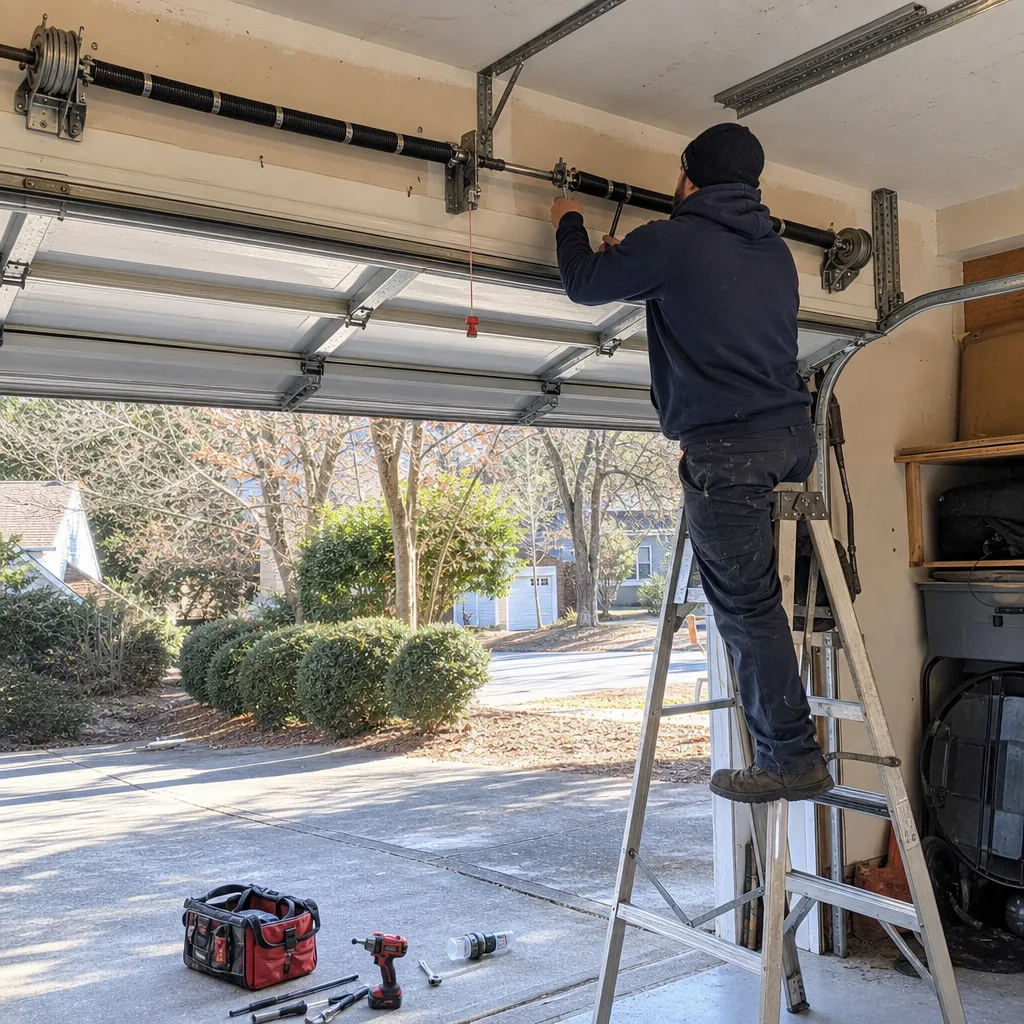
A garage door weighs somewhere between 130 and 400 pounds depending on size, insulation, and material. The springs exist to make that weight manageable, and they do it by storing mechanical energy. A fully wound torsion spring on a two-car door holds roughly the same energy as a car traveling about 10 miles per hour. When that energy releases into a hand, forearm, or face, it does not give you time to react. We’ve seen the aftermath of spring releases in Atlanta-area homes, and the injury pattern is consistent: broken radius, fractured metacarpals, and lacerations from the winding cone.
This is why any serious guide to garage door repair separates work by energy state. A bottom seal is dead rubber. A roller on an extension spring system can be replaced while the spring is in its relaxed, unloaded position with the door open. A torsion spring is never relaxed while installed; it is under rotational tension at every point in the door’s travel except one specific balancing point, and finding that point requires knowing exactly what the spring’s cycle rating is. Sandy Springs homes run a wide range of door types depending on when the subdivision was built: postwar ranch styles in North Springs often have old extension spring setups, while newer construction near the Perimeter and east of Roswell Road tends toward torsion systems. Know which one you have before you touch anything.
Component-by-Component DIY Viability: An Honest Table
The following table is specific. It names the component, the tools required, the most common injury mechanism, and the professional price range in Sandy Springs as of 2025. For a deeper look at how these costs break down, see our Garage Door Cost Breakdown: The Sandy Springs Homeowner’s Reference for 2026. No difficulty ratings, no arbitrary checkboxes. Just what it is, and what it costs in either time or money.
| Component | Tools Required | Injury Mechanism if Done Wrong | Professional Price Range (Sandy Springs) |
|---|---|---|---|
| Bottom weather seal | Measuring tape, utility knife, screwdriver | Minor: pinched fingers in retainer grooves | $85 to $160 installed |
| Rollers (extension spring door, door in open position) | Vise grips, adjustable wrench, replacement rollers | Moderate: door panel falling if roller slips from track | $90 to $180 for a full set installed |
| Opener remote reprogramming | Ladder, existing remote, opener manual | None if ladder use is safe | No charge to $75 service fee |
| Extension spring replacement | New springs matched by size AND cable length, safety cables, proper fasteners | Serious: spring snap-back, cable lash, falling panel | $180 to $320 for a pair installed |
| Rollers (torsion spring door, spring under tension) | Professional winding bars, torque knowledge, roller replacement | Severe: torsion spring release causing blunt force | $90 to $180 for a full set installed |
| Torsion spring replacement | Correct winding bars, stress-rated sockets, full spring cage procedure | Catastrophic: bone fracture, facial trauma, partial amputation | $225 to $395 for a pair installed |
| Cable replacement (both spring types) | Cables matched to drum and door weight | Severe: cable under tension snapping, door free-fall | $130 to $220 installed |
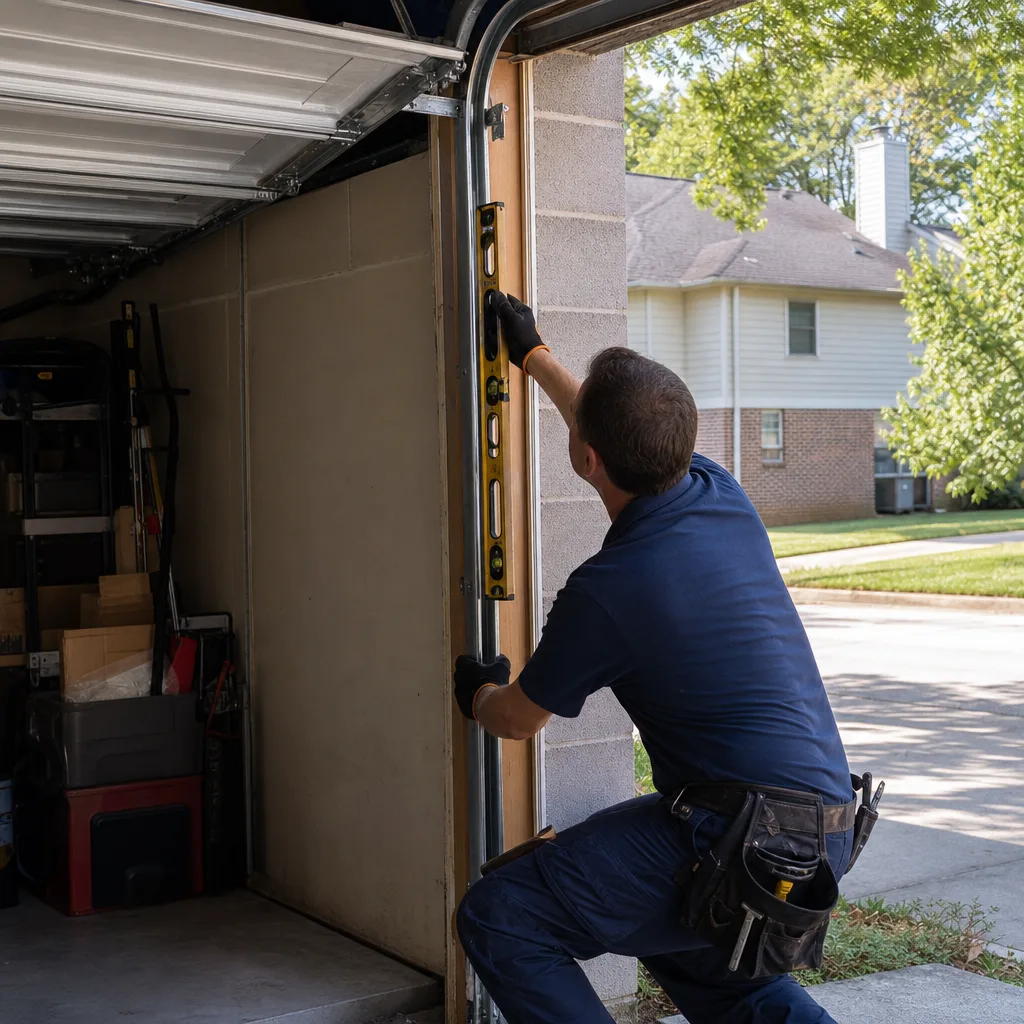
| Track realignment or replacement | Level, fasteners, reinforcement brackets, drill | Moderate to severe: door coming off track under load, falling panel | $150 to $350 depending on track length |
We priced these ranges from actual Sandy Springs service calls and quoted work, not aggregated online averages. Your panel material, spring cycle count, and whether the door is a standard 16-by-7 or an oversized custom height will shift these numbers. The point of the table is not to make you choose based on price alone. It’s to show you where the risk and the price converge. The expensive repairs are expensive because the failure mode is a human body in the energy path.
Torsion Springs vs Extension Springs: Why the Difference Matters
These two systems are not variations of the same thing. They operate on entirely different physical principles, and that difference determines what you can safely do at home.
Extension springs sit along the horizontal tracks on either side of the door. They stretch to store energy when the door closes and contract to help lift it when the door opens. On a door in the open position, the extension springs are relaxed. This is the only spring configuration where a homeowner can replace a roller, inspect a cable, or swap a hinge without releasing spring tension. Extension springs do still carry risk: if one breaks mid-travel, the cable can whip and cause a laceration. In our experience across Sandy Springs homes built before about 2005, extension spring failures most often present as a door that suddenly feels heavy on one side or hangs crooked.
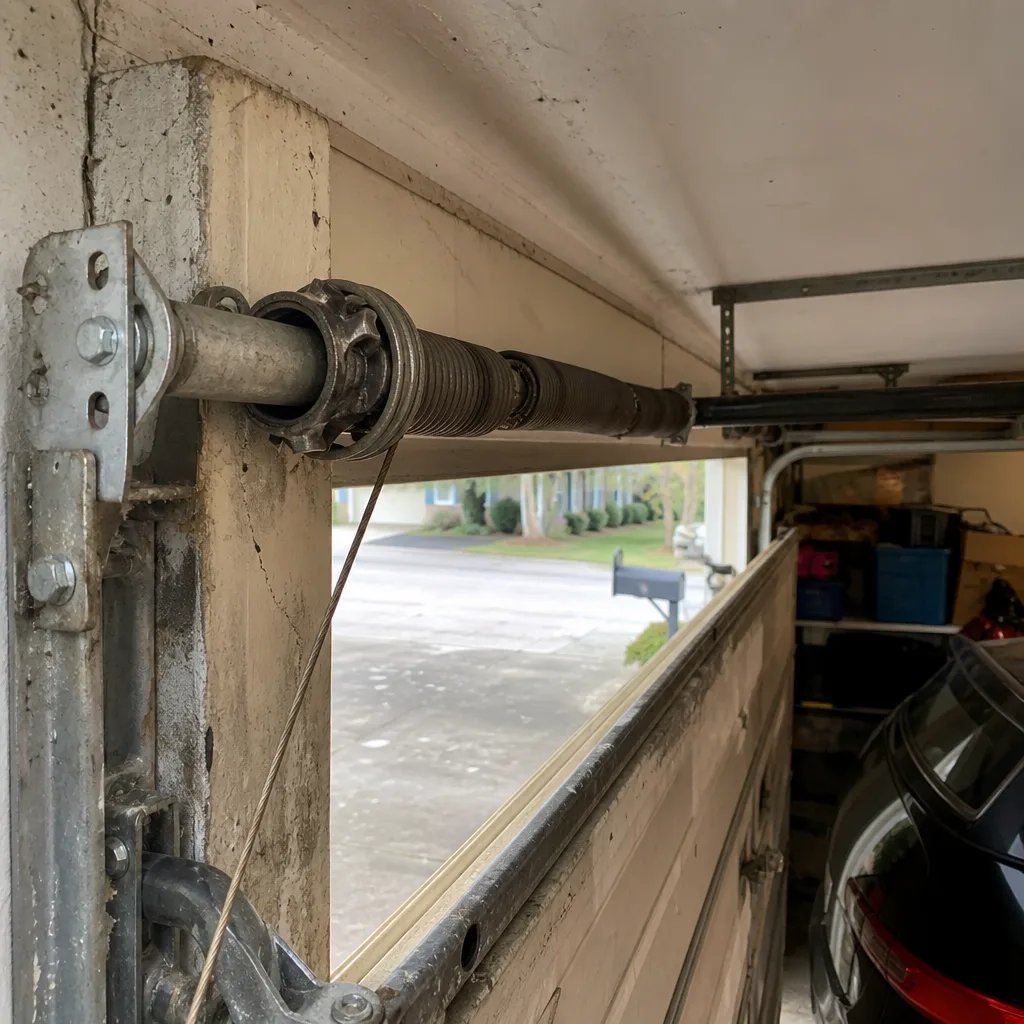
Torsion springs sit on a shaft above the header, centered or offset. They store rotational energy by winding, and the winding cone and set screws on the shaft hold that energy constantly. There is no safe home position for a wound torsion spring. The door’s balance point, where the spring carries the least rotational load, is not a safe position; it is only the position where the spring holds the least tension. A YouTube tutorial will show you how to release or wind a torsion spring with bars. What it will not show you is the torque curve, the way the bar can kick when you cross the half-turn threshold, or what happens when a bar made of mild steel snaps inside a hardened cone. The bars a professional uses are not the same steel as the rods you can buy at a hardware store. Sandy Springs has no shortage of older ranch homes with original torsion hardware from the early 2000s, and we routinely see springs where the cycle count is long past rated life and the cone itself is fatigued. Do not attempt a torsion spring replacement on a spring that is already past its cycle rating. That is precisely the spring most likely to release unpredictably during a DIY attempt.
The Three Tasks a Capable Homeowner Can Genuinely Handle
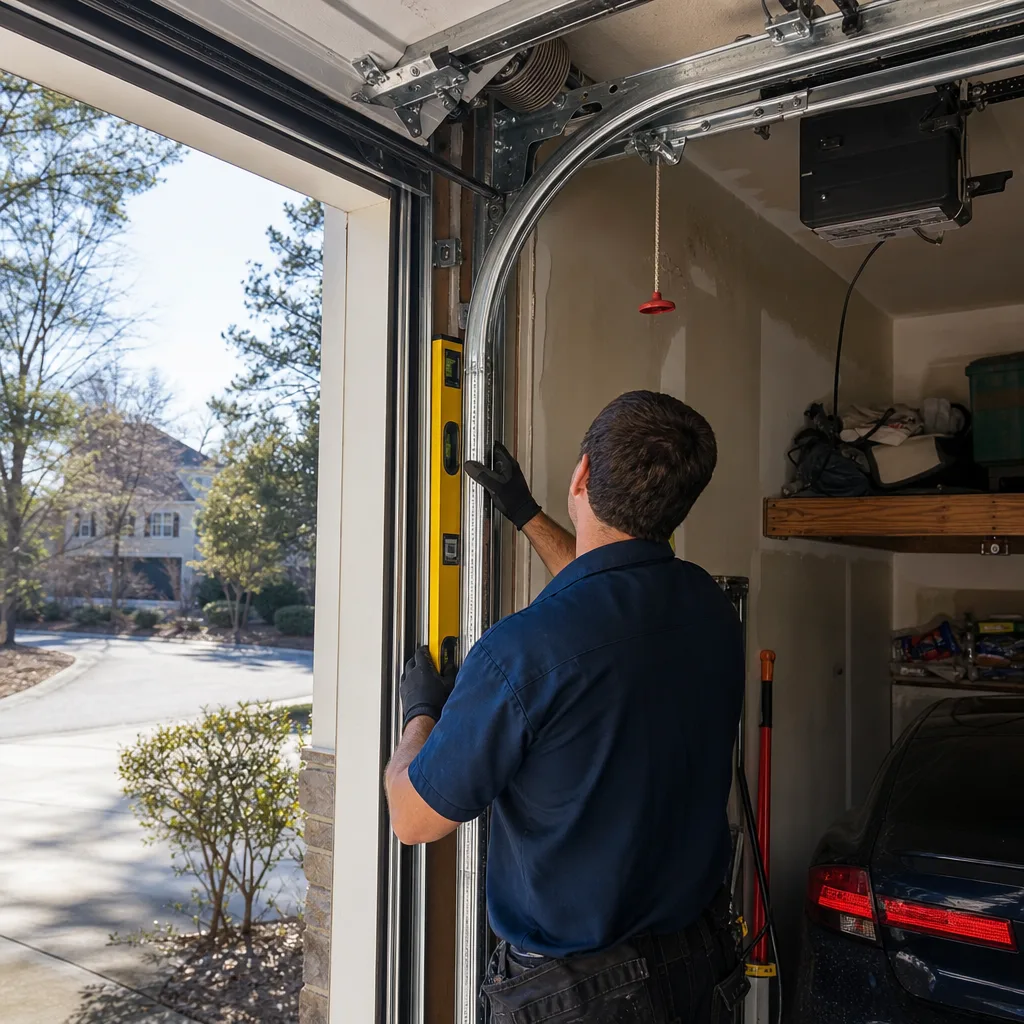
Not to hedge: there are exactly three garage door tasks we consider safe for a motivated homeowner with basic hand tools. The common thread is that none of them require touching a spring under tension or removing a panel from the assembly.
1. Bottom seal replacement
The bottom seal, or weatherstrip, is a vinyl or rubber strip that runs along the bottom panel edge. It fails slowly: sunlight in a Sandy Springs summer, friction against concrete, or simple age. Replacement is straightforward: pull the old seal from its retainer channel, cut the new one to width, slide it in, and fasten the ends. Tools required: a measuring tape, a utility knife, and a screwdriver. Time required: 30 to 45 minutes. Injury risk: trivial. This is the one task we tell every homeowner to try before calling us, because the material costs about $20 and the failure mode is a worn seal, not a hospital visit.
2. Roller replacement on extension spring doors only
If your door uses extension springs along the horizontal tracks, you can replace rollers with a couple of precautions. Raise the door to the fully open position so the springs are relaxed. Clamp the door to the track on both sides with locking pliers. Then remove the old rollers one at a time, working from the bottom panel upward, and swap in the new ones. Do not remove more than one roller per track at any point, and do not let the door shift on the clamps. Use nylon rollers with sealed bearings; they run quieter and last longer than steel rollers in Sandy Springs’ humidity. Time required: 60 to 90 minutes. Injury risk: moderate if the door shifts off the clamps, which is why the clamps are non-negotiable.
3. Opener remote reprogramming
Most modern openers from LiftMaster, Chamberlain, and Craftsman use a learn button on the back of the motor unit. Press it, press the remote button, and they pair. Older fixed-code systems require matching a series of DIP switches between the remote and the opener; this takes longer but requires no special tools. If the remote won’t pair, the issue may be a logic board failure rather than programming, and that’s a different problem. Time required: 10 to 30 minutes. Injury risk: none beyond the ladder. If the opener is older than about 12 years, consider that the radio frequency components may be degraded, and a new remote may not solve the underlying issue.
Everything else, from hinge replacement on a torsion spring door to sensor alignment to any cable work, crosses the line. Call a pro. Or better: call us, and we’ll photograph the failed component before quoting anything. That’s Clause 4 of The Haven Standard, and it’s the reason a written quote from Servo Garage Doors Sandy Springs home reads like a diagnostic report rather than a sales pitch.
Is the Door Out of Alignment Because of Hardware or Header?
When a door hangs crooked or rubs one track, the first question is whether the issue is adjustable hardware or a structural problem. This distinction saves money if you can make it correctly.
Hardware alignment issues live in the track brackets, hinges, rollers, and spring balance. Signs include: the door binds at one specific point but moves freely elsewhere, one side of the track shows fresh wear where the roller is eating the metal, or the door is heavy on one side but the springs and cables are intact. These are generally fixable by adjusting brackets, replacing a worn hinge, or correcting the spring balance. Some of this is DIY-addressable on an extension spring door. None of it is DIY-addressable on a torsion spring door, because correcting spring balance means winding or unwinding the spring.
Structural header issues are different. The header is the reinforced beam above the door opening where the spring shaft mounts and where the track hangers anchor. In Sandy Springs homes with older framing, particularly in neighborhoods where garages were converted or expanded, the header can pull away from the wall under repeated door cycling. Signs include: the track hangers pulling loose from the header, visible separation between the header and the trim, or the door consistently shifting toward one side no matter how many times the track is adjusted. If the header is compromised, no amount of bracket adjustment fixes the problem. The fix involves the structure, not the door, and it belongs to a contractor who understands framing loads. Document what you observe, take measurements, and do not attempt to brace a pulling header yourself.
- Raise the door halfway and release the opener. A well-balanced door stays put. If it drifts down or shoots up, the spring balance is off.
- Check the track brackets. Look for fasteners that have pulled out, brackets that have deformed, or track sections that have separated at the splice.
- Measure the gap between the door edge and each track. Differences over a quarter inch indicate a realignment need, not a header problem.
- Mark the header with a pencil line at the center point. Close the door, open it fully, and re-check the line. If the header itself has moved, the line will not sit where it started.
What to Document Before You Touch Anything
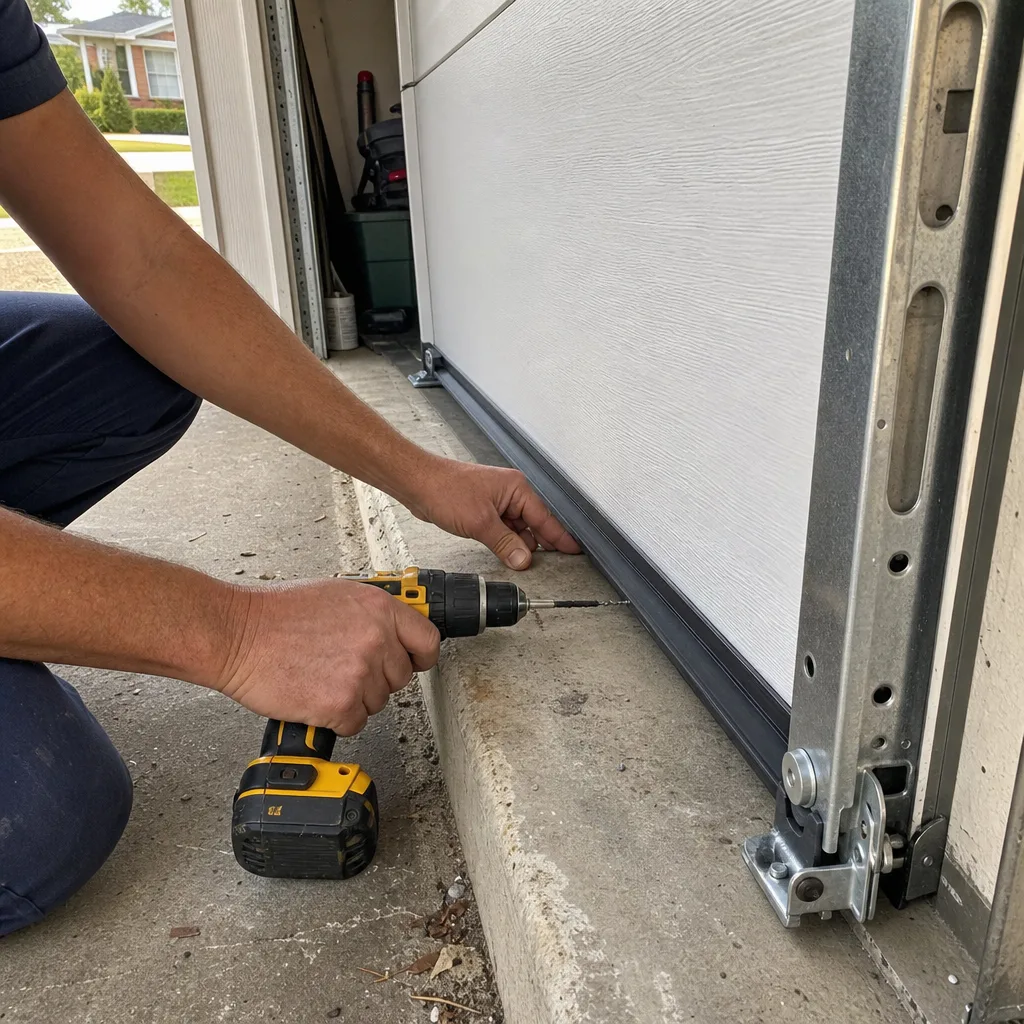
Every good diagnostic sequence starts with documentation, because the moment you start disassembling, the evidence of what failed gets disturbed. For a step-by-step approach, see our Garage Door Repair Maintenance Checklist for Sandy Springs Homeowners. This is not busywork: it’s the difference between a technician arriving with a specific diagnosis in mind versus arriving at hour one of a four-hour sleuth.
- Photograph the entire door from inside, at rest and in the open position. Wide shots show the geometry. Close shots show the wear.
- Photograph the specific components you plan to touch. Rollers, hinges, cables, spring cones, track brackets. If something breaks mid-repair, the photos are your reference.
- Measure and record the spring wire diameter, inside diameter, length, and coil count. On a torsion spring, this is usually stamped on the cone or marked on the spring. This data ensures the replacement is matched correctly.
- Record the door’s size, manufacturer, and panel material. This determines all replacement parts downstream.
- Note any symptoms in plain language, with dates. “Door clunks at the top of travel when closing, started March 2025” is more useful to a technician than “door is noisy.”
- Find the opener’s model and serial number. Most are on a label on the motor unit. If reprogramming fails, the tech needs this to match parts.
This documentation habit is the same one we formalized into The Haven Standard when Servo started in 2015. The founding rule was simple: photograph the failed component before quoting a replacement. A customer who can see the crack in the spring cone doesn’t need someone to tell them the spring failed. They need a price. Clause 1 of The Haven Standard puts that price in writing before any work starts, and the documented photo record closes the loop when the work is done.
Common Mistakes to Avoid
- Using screwdrivers or pry bars as winding tools. A torsion spring cone requires winding bars with a specific diameter that fits the cone holes snugly. A screwdriver does not fit that hole, and when it slips, the spring releases its energy into whatever is closest, which is usually your face. We’ve seen improvised tool attempts end with a shattered garage window and a trip to the ER.
- Assuming extension springs are “safer” because they’re outside the shaft. Extension springs snap back when they fail, and the existing cable becomes a lash line. Westlake and Buckhead area service calls frequently involve older extension spring doors where the safety cables were either never installed or removed during a prior repair. If your door uses extension springs, verify the safety cables are in place before doing anything else.
- Replacing a spring without knowing the cycle rating. Springs are rated for a number of cycles, not years. Two homes on opposite sides of Sandy Springs can have identical springs aging at different rates because one family cycles their door six times a day and the other twice. Match by measured spec, not by what was there.
- Removing the bottom panel to replace a cable. The bottom panel carries the entire weight load through the cable. Removing it without securing the spring system is a free-fall waiting to happen. Cable work on any door is professional territory.
- Ignoring opener force settings after a repair. When you replace rollers, seals, or hinges, the opener’s force and limit settings should be rechecked. An opener set for a heavy, worn door can crush a person or object if it doesn’t reverse properly after the repair. Newer residential openers are required to reverse on contact, but older models, especially those pre-1993, may not. If your opener in an older Sandy Springs home predates that, replace it.
- Failing to check professional licensing and insurance before hiring. Georgia requires garage door contractors to carry a license. Ask to see the number on the truck, the paperwork, and the insurance certificate. A written estimate from a licensed professional is always going to beat a verbal quote from someone without one.
- Accepting a quote over the phone for a spring that hasn’t been seen. A quality company will want to see the spring before finalizing the price. In our service area, we photograph the failed component before quoting a replacement, because that is what a legitimate diagnosis looks like.
When to Call a Professional
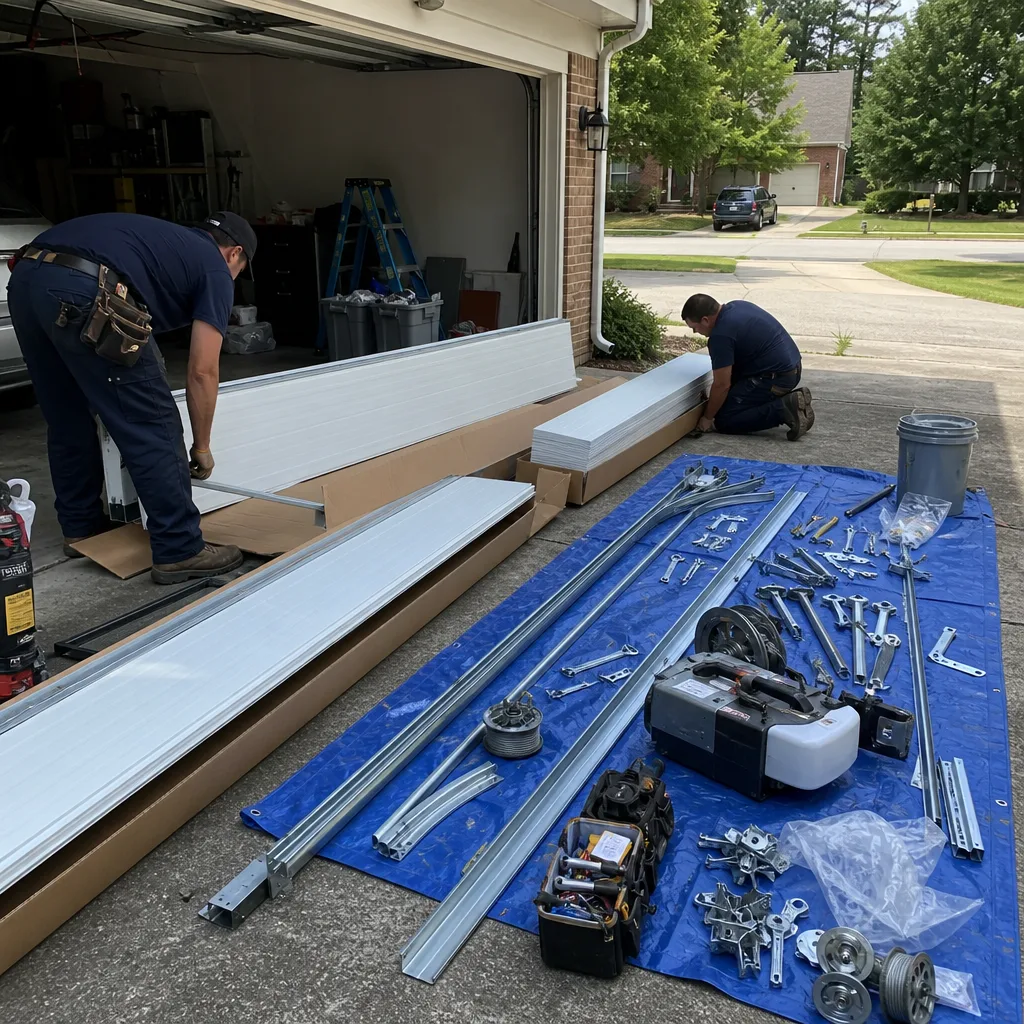
Call a professional when the door carries a torsion spring and anything on the spring assembly, cables, or bottom panel needs work. Call when the door has come off its tracks, when a cable has snapped, when the opener’s logic board is the issue, or when the header shows separation from the wall. Call when you’ve documented the problem and you want a second opinion on a quote you already have. And call when you’ve started a DIY task and realized mid-way that you’re over your head: we handle those repair-backs without judgment, because we’d rather see a measured, documented, half-finished job than a bad injury. Garage Door Repair in Sandy Springs is the page for same-day and emergency needs. Servo Garage Doors Sandy Springs offers free estimates in Sandy Springs: call (470) 944-6743.
Frequently Asked Questions
Spring replacement in Sandy Springs typically runs $180 to $395 depending on whether the door uses extension springs or torsion springs, and how many springs need to be replaced. Torsion springs on a two-car door average $225 to $395 for a pair installed. Extension spring pairs average $180 to $320 installed. Every quote from us includes the written price and written scope before any work starts. Call (470) 944-6743 for an exact quote on your spring setup.
No. Torsion springs hold enough stored energy to break bones or cause severe lacerations if released improperly, and there is no safe home position for a wound torsion spring. This is not a task where competence matters more than caution; it’s a task where the physics is indifferent to your skill level. Hire a professional for any torsion spring work.
Bottom seal replacement, roller replacement on extension spring doors with the door clamped in the open position, and opener remote reprogramming are the three tasks a capable homeowner can handle safely. Anything involving a torsion spring, cables, track realignment, or the opener’s internal components should go to a professional, and we would tell you the same thing even if you weren’t our customer.
A door that opens halfway and stops is usually fighting a limit switch setting, a spring balance problem, or a broken spring. If the opener’s limit settings are correct and the door still stops, the spring balance is the culprit: a well-balanced door moves through its full travel with the opener barely working. On a torsion door, that spring assessment belongs to a professional. If you’re in Sandy Springs, we can diagnose it the same day and show you the failed component before quoting anything.
A new garage door installation in Sandy Springs ranges from $1,200 to $4,500 depending on door size, panel material, insulation, and whether you’re replacing the opener at the same time. For a full breakdown, see Garage Door Installation in Sandy Springs. Every installation is quoted as a flat, written price and written scope before any work starts, with a documented photo record when the job closes.
If the opener is over 12 years old, lacks automatic reversal, or needs a logic board replacement, replacement is usually more cost-effective than repair. Intermittent function, grinding gears, or a trolley carriage that no longer engages are repair candidates. We service LiftMaster, Chamberlain, Genie, and Raynor units in Sandy Springs, and the diagnostic is always documented with photos. Garage Door Opener Repair & Installation in Sandy Springs covers the full scope.
The Bottom Line
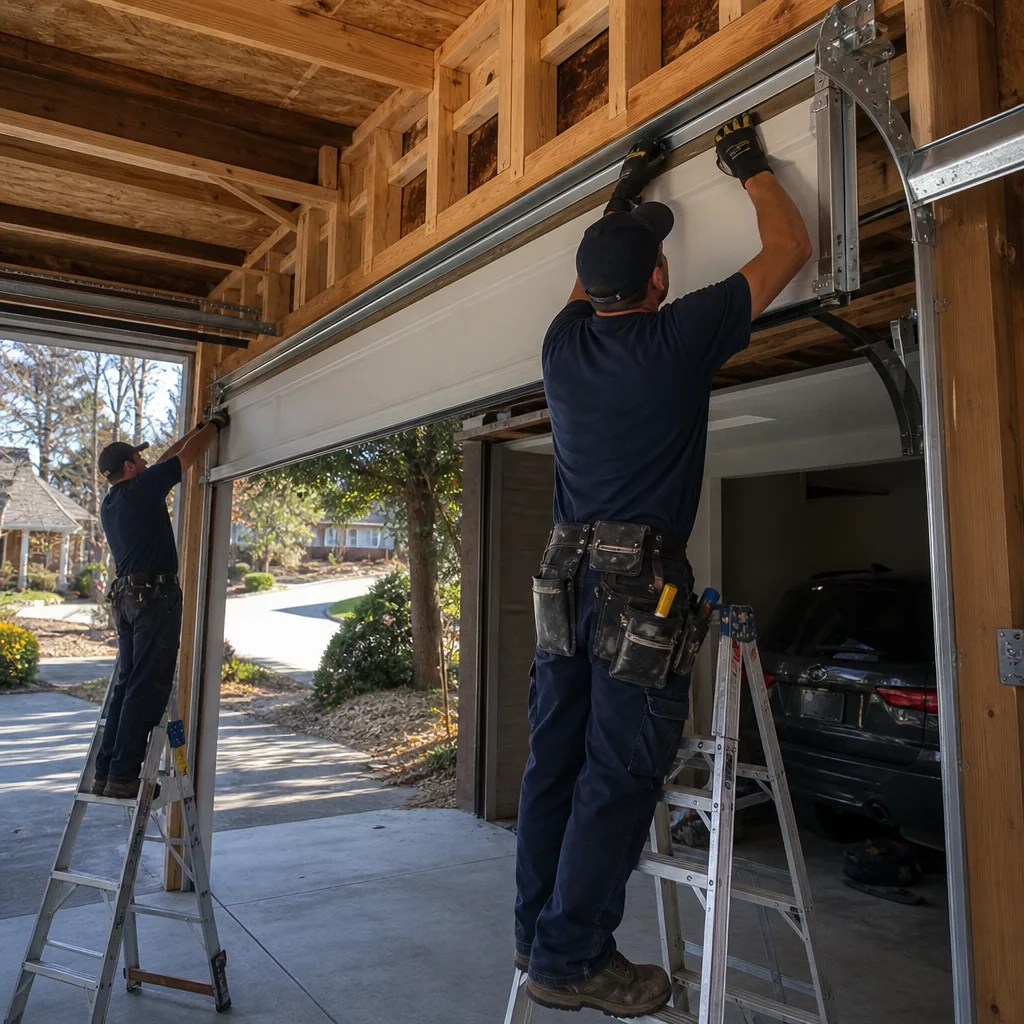
The DIY versus professional question stops being ambiguous the moment you name the component. Bottom seals, rollers on extension spring doors, and remote reprogramming are safe and appropriate for a careful homeowner. Torsion springs, cables, and track realignment are not. Sandy Springs homes run every type of door system, and the honest answer is that some tasks are priced for parts and effort while others are priced for energy and risk. When in doubt, document first, then call. We’ll show you the failed part, quote the job in writing, and leave you with a photo record of what was done.
If you have a written estimate from another company, bring it in. Our Free Second Opinion covers any competing written quote. Contact Servo Garage Doors Sandy Springs at (470) 944-6743 for a free estimate, and we’ll quote the job in writing before any work starts.
Written by Marcus Deller, Owner at Servo Garage Doors Sandy Springs, serving Sandy Springs since 2015.